Summer School 2025: Climate-Friendly Construction
Summer School 2025: Climate-Friendly Construction
August 26, 2025 - Summer School 2025: Climate-Friendly Construction
“Renewable Materials” at the Heart of Sustainable Building Culture
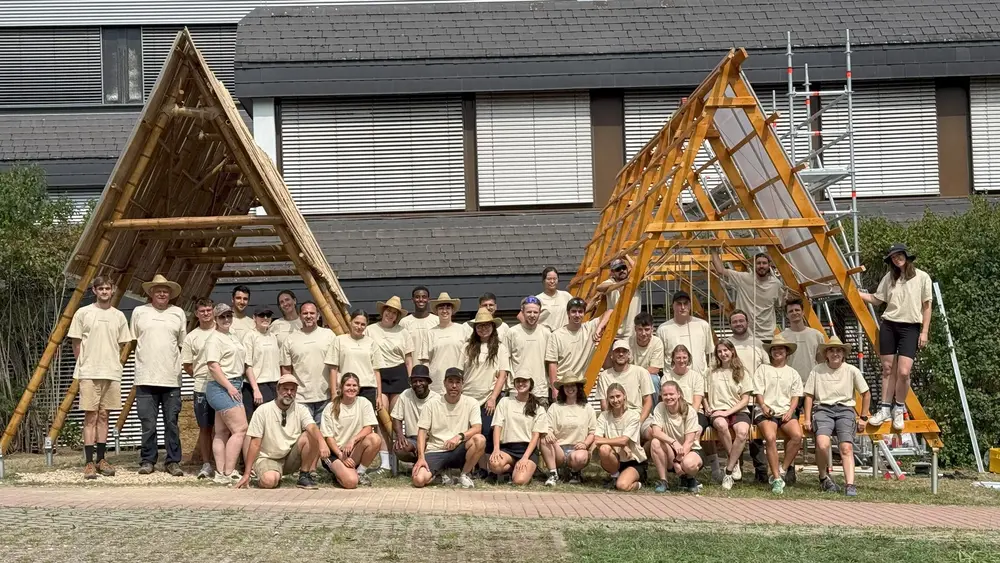
30 students, 9 countries, 13 universities, and one common goal: bringing sustainable construction to life. Under the theme “Renewable Materials,” the HSRM Competence Center for Renewable Building Materials held its fourth Summer School this summer at Hochschule RheinMain – University of Applied Sciences and Arts—open to international participants for the second time.
An Outdoor Seminar Room for HSRM
This collaborative project between the Faculty of Architecture and Civil Engineering, the Faculty of Applied Social Sciences, and the TeachingLearningCenter at HSRM is part of the “Outdoor Seminar Room” sustainability project for climate-resilient outdoor spaces. Initiated by the Faculty of Applied Social Sciences, it is providing new impetus for sustainable teaching and learning spaces on the Kurt-Schumacher-Ring Campus.
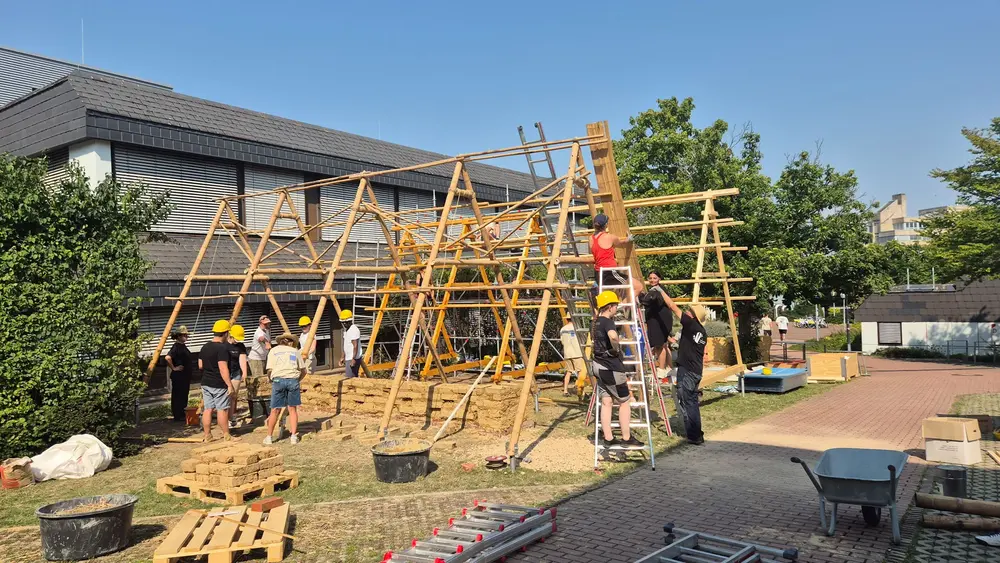
Over the course of six days, 30 dedicated students—16 from Hochschule RheinMain – University of Applied Sciences and Arts and 14 from international partner universities—worked together on innovative projects focused on the sustainable use of renewable raw materials in construction. The participants came from various subject areas, including Landscape Architecture, Sustainable Design, Building Management, Sustainable Leadership, Architecture, Urbanism, and Climate Action, as well as many other fields.
International, Interdisciplinary, and Practice-Oriented
The interdisciplinary team consisted of students from a total of 13 universities in 9 different countries—impressive evidence of the growing international interest in sustainable Architecture and construction practices.
It was particularly gratifying to see students from our long-standing partner universities—the Polytechnic University of Madrid and the University of technology Vienna—participate once again.
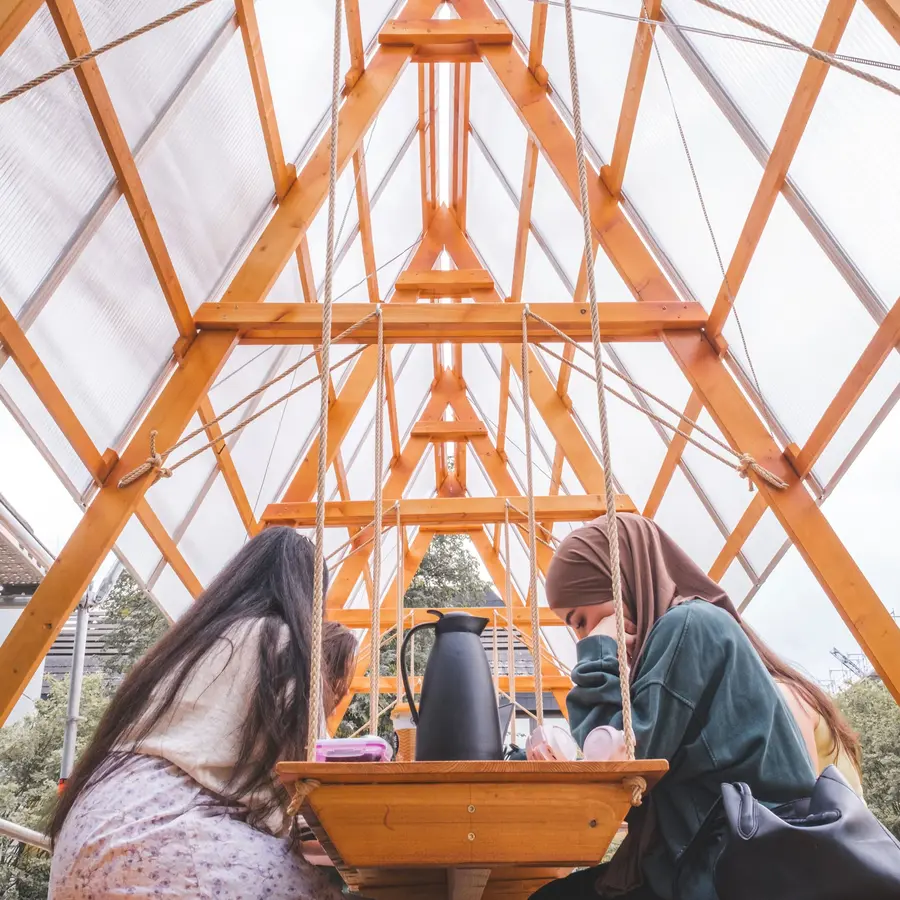
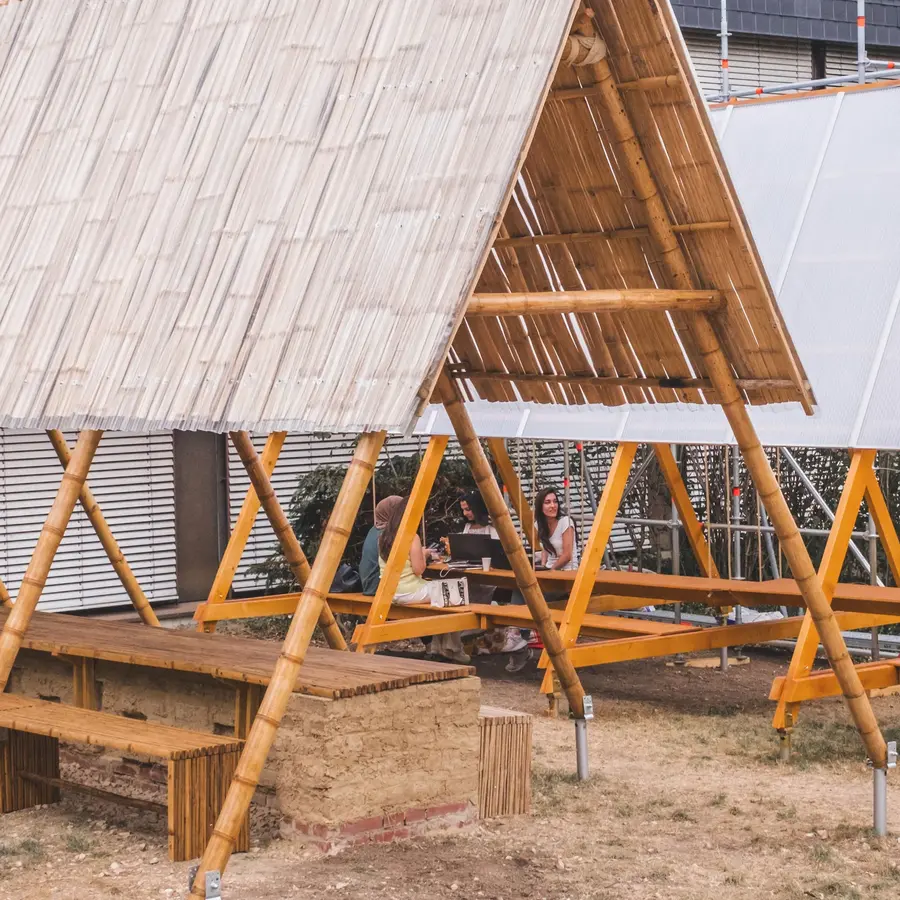
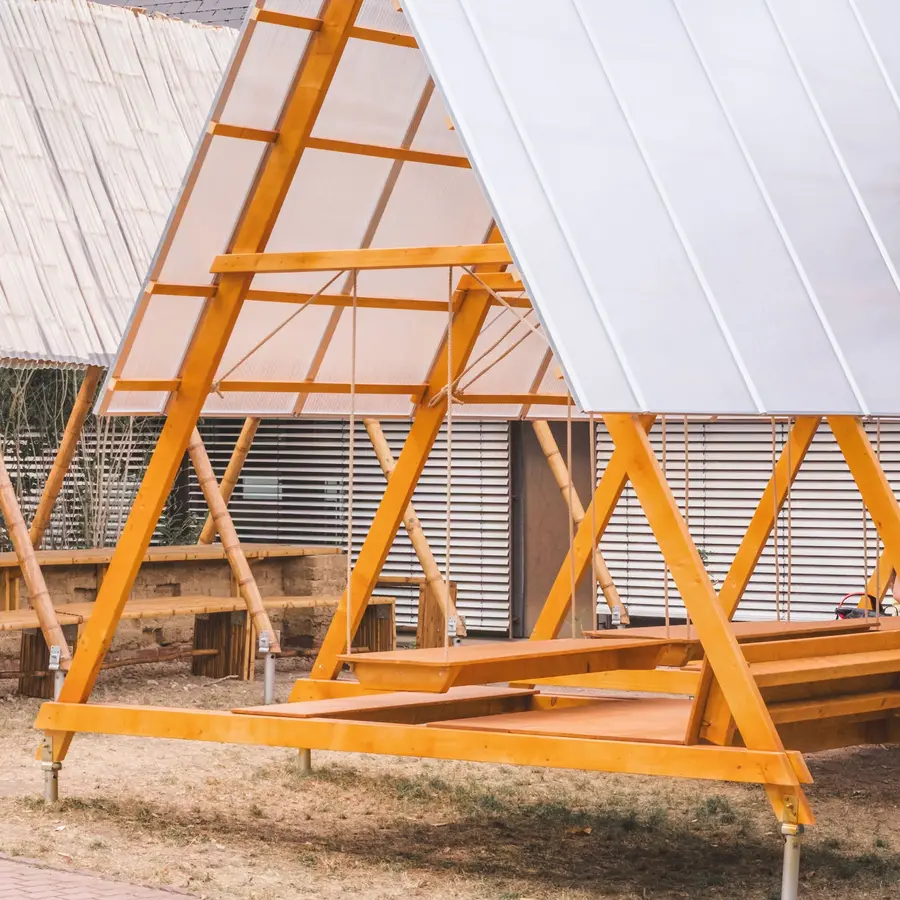
Practical Project: Two Pavilions as New Outdoor Teaching and Learning Spaces
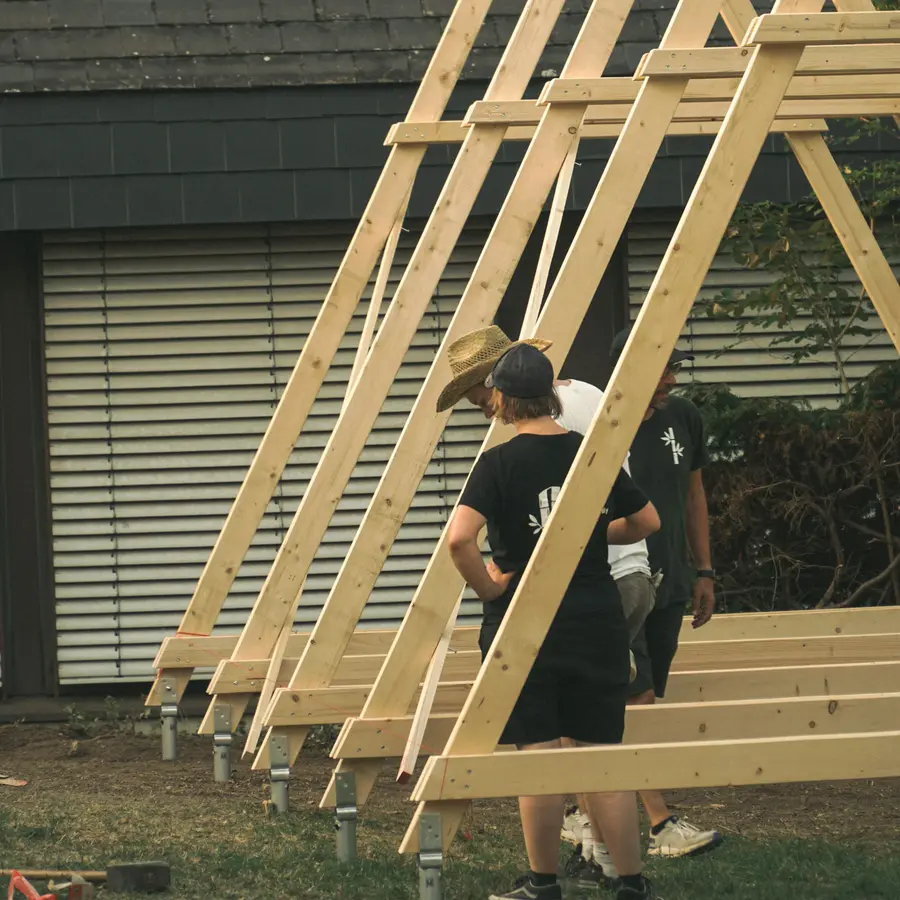
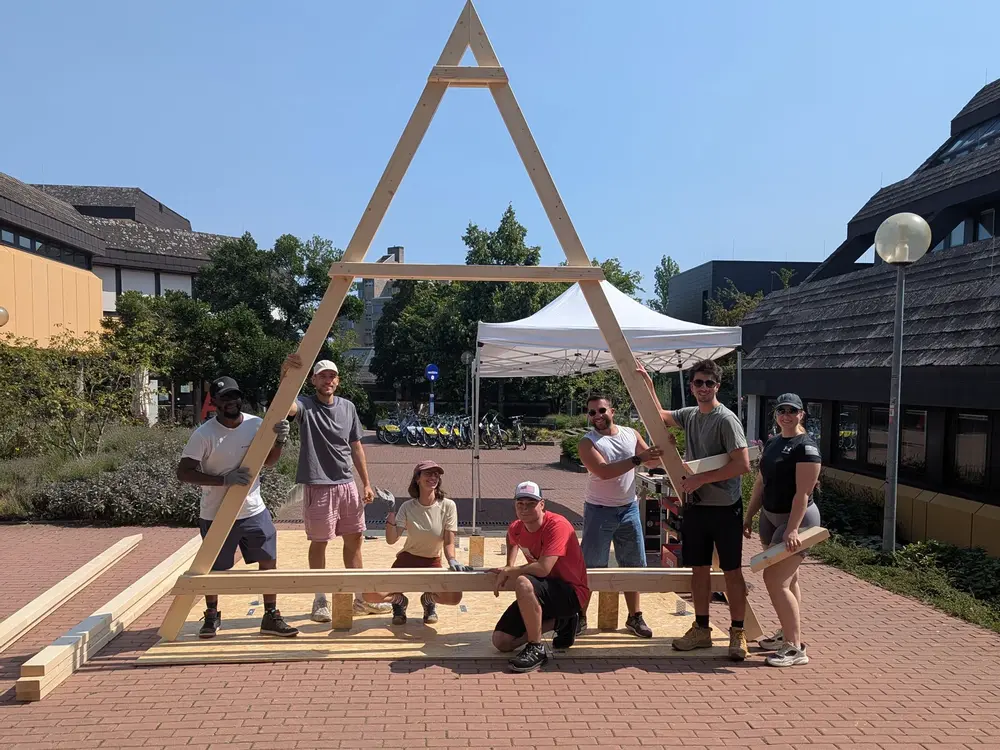
The seminar was led by Prof. Sascha Luippold and his team as part of the “Climate-Friendly Construction” seminar series. The goal was to create two functional outdoor teaching and learning spaces on the campus in just one week—with a strong focus on renewable, climate-friendly materials.
Workshops, Teamwork, and a Summery Atmosphere
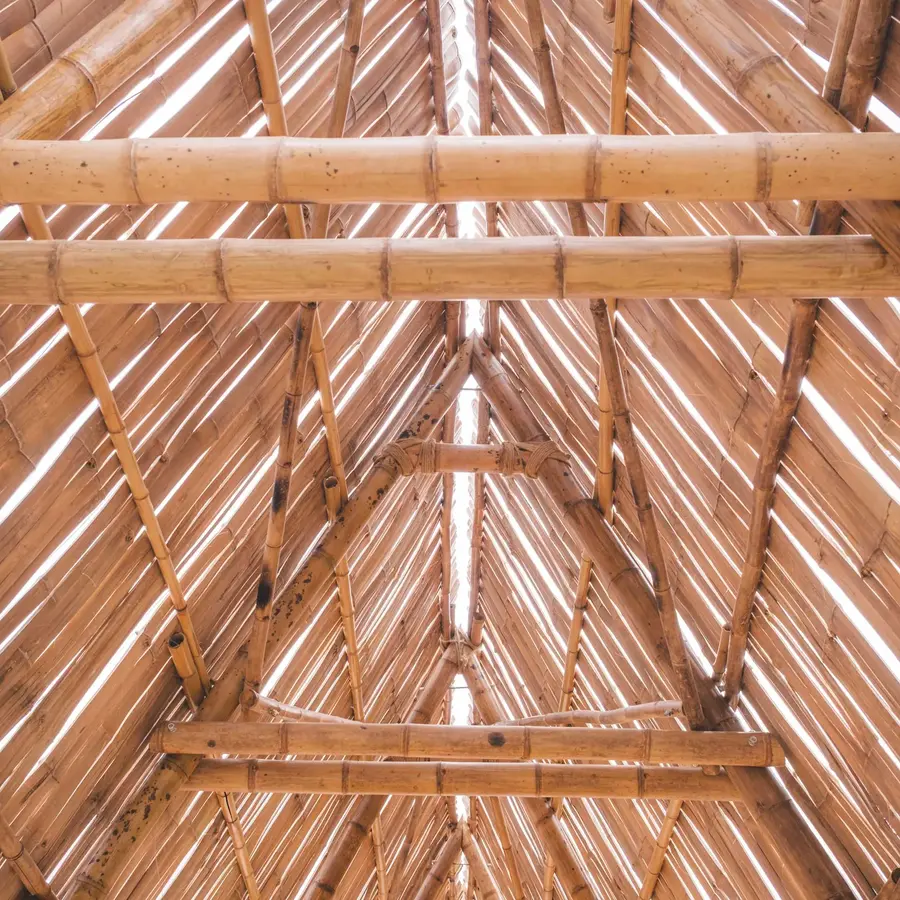
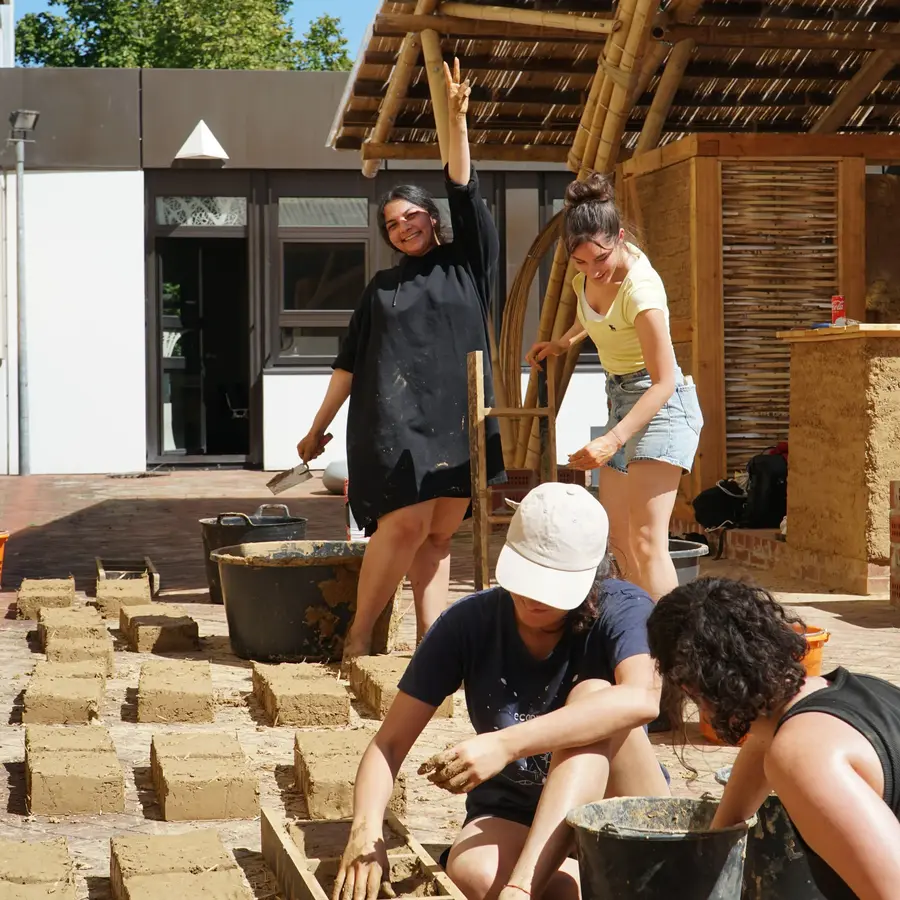
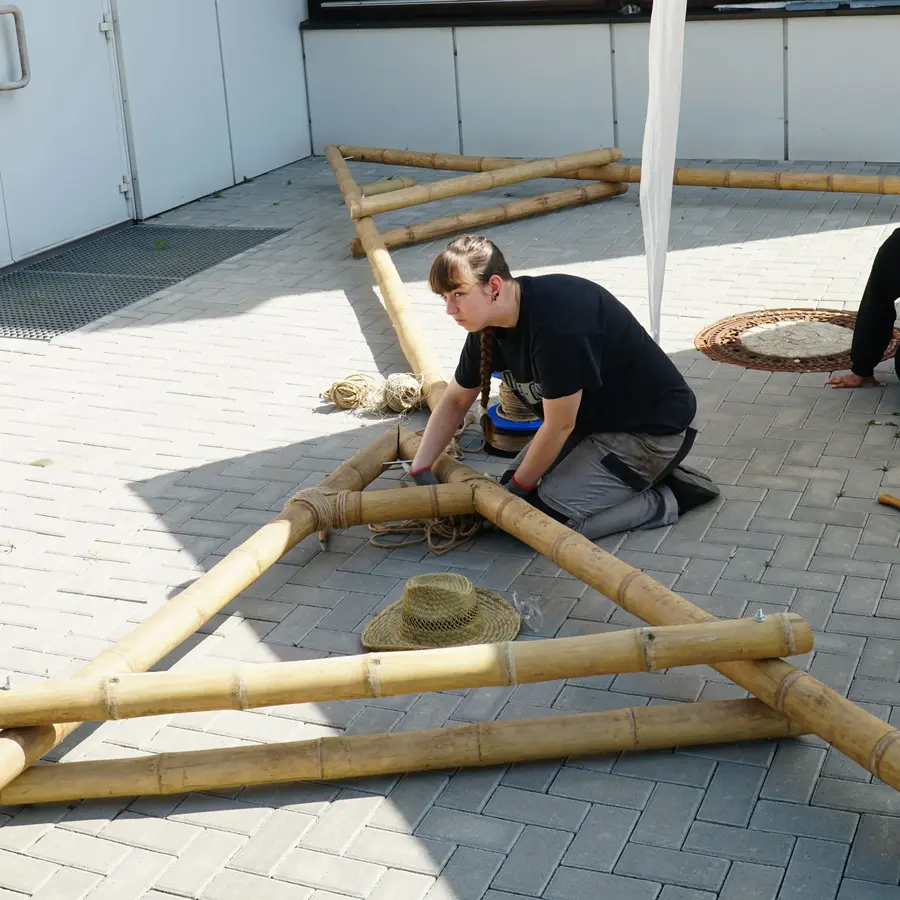
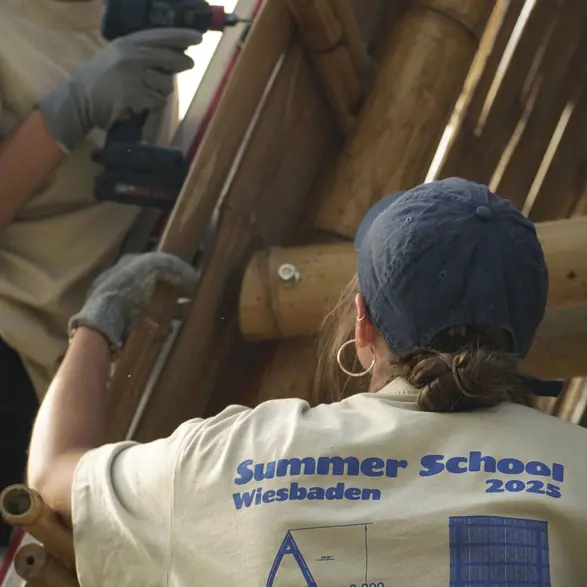
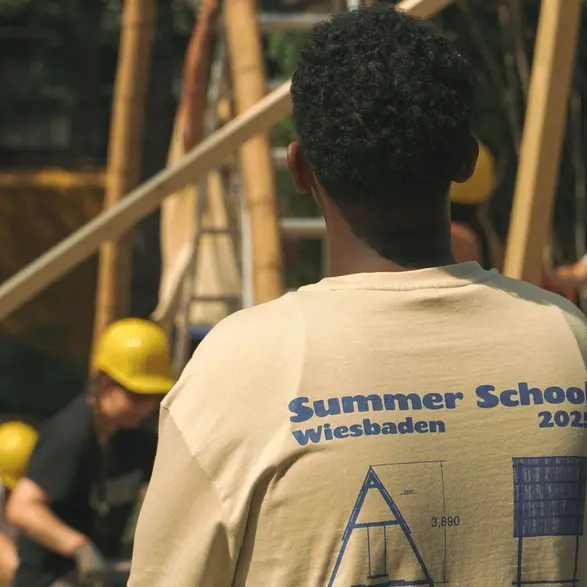
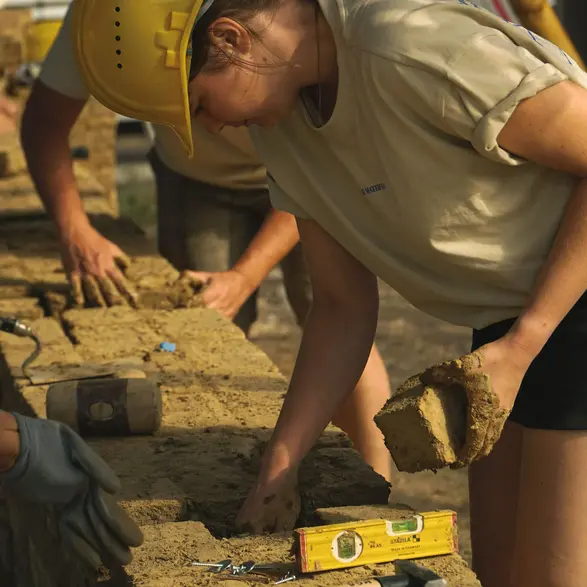
In hands-on workshops, participants learned how to work with various sustainable building materials, tools, and construction methods. During the seminar, they worked hands-on with a variety of renewable materials such as wood, straw, clay, and bamboo. Despite summer temperatures reaching up to 35 degrees, the groups worked with great enthusiasm—often late into the evening. Short ice cream breaks, a relaxed atmosphere, and a shared goal contributed to a special sense of community.
It was impressive to see how dedicated and motivated the students were in their work on the project. In a short time, a group of students from very different backgrounds had become a true team.
Nikolai Ochs, adjunct instructor at HSRM
Supporting Program: Culture, Exchange, and Inspiration
Even away from the construction site, the Summer School offered a varied program: Over pizza together, on a city tour, and during a visit to the wine festival, participants had the opportunity to get to know the other attendees and the city of Wiesbaden.
A special highlight was the lecture evening on Thursday titled “Material. People. Living – New Perspectives in Architecture.” Following an introduction by Prof. Dipl. Arch. ETH Sascha Luippold, Dipl.-Ing. Jan Glasmeier spoke about his earthen construction projects in Southeast Asia. Marvin Martin then presented his earthen construction projects in West Africa—particularly impressive was the “0 KM House,” in which all building materials came from within a radius of less than one kilometer. Next, Dipl. Arch. Luis Da Gama shared fascinating insights into his bamboo projects in Portugal. The evening concluded with a presentation by Andrés Bäppler on sustainable urban development in Colombia, in which he showcased specific projects that already have ties to Hochschule RheinMain – University of Applied Sciences and Arts.
The evening was rounded out by an exhibition of student work from the past semester and the grand opening of the BambooBar.