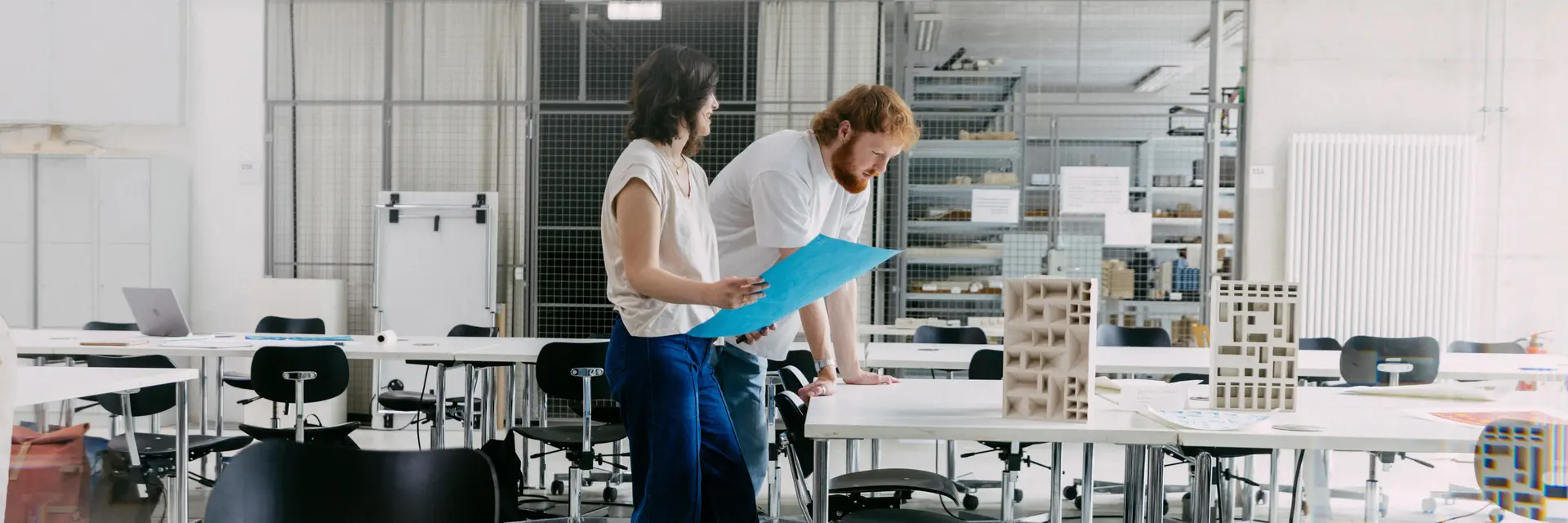
In spring 2026, students from the Faculty of Architecture and Civil Engineering at Hochschule RheinMain University of Applied Sciences and Arts (HSRM) participated in an international on-site seminar in Portugal under the supervision of Prof. Sascha Luippold and Sarah Mesz. The excursion was part of the Climate-Friendly Construction – On-Site seminar series and focused on the early construction phase of an innovative bamboo structure at Praia do Barril near Tavira.
The workshop marked the official kick-off of the construction phase and therefore represented an essential part of the overall project development. It offered students a unique opportunity to step directly into an international construction environment and experience sustainable building with bio-based materials not only in theory, but in practice. Through site visits, expert input, and hands-on work, participants gained insights into the potential of bamboo as a structural material within contemporary architecture and engineering.
From the Plant to a Structural Material
The seminar began with an introductory visit to Bambuparque, where students followed the entire value chain of bamboo as a construction material. From cultivation and harvesting to treatment and structural application, the visit provided a comprehensive understanding of how a fast-growing plant can be transformed into a high-performance building material.
A second site visit led to one of Europe's largest hemp brick manufacturers. Here, students gained insight into the production process, material properties and the role of hemp-based products in sustainable construction.
International Collaboration on an Innovative Bamboo Structure
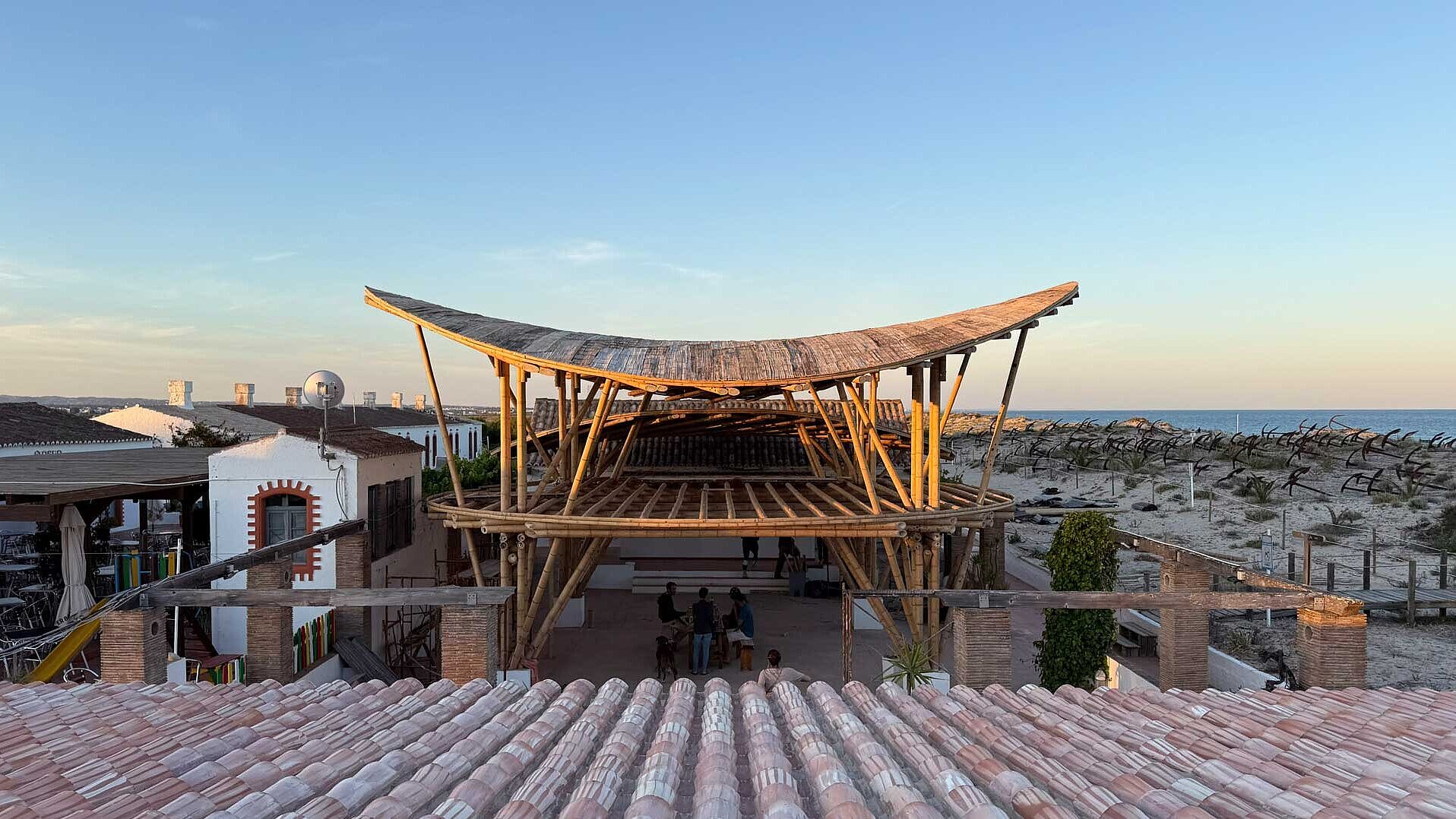
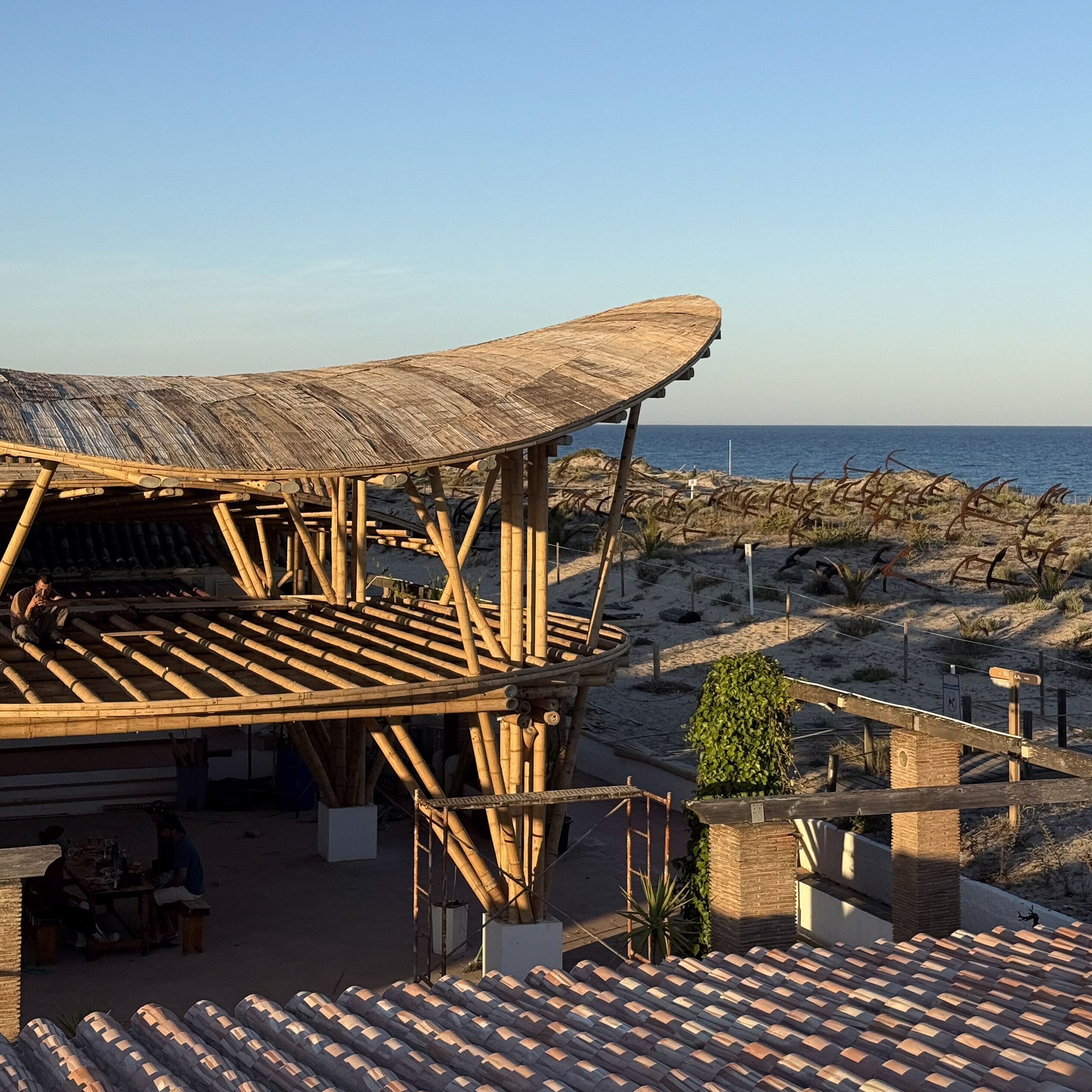
The practical focus of the workshop was the initial construction phase of a pioneering bamboo structure at Praia do Barril near Tavira. Designed as a pergola for a beach bar, the project is based on complex geometries such as hyperbolic paraboloids and demonstrates how bio-based engineering with bamboo can meet stringent European structural safety standards while engaging with emerging international construction approaches.
Commissioned by Manuel Saporiti and designed by Luis Gama Studio, the structure was initially constructed under the on-site coordination of internationally recognized bamboo expert Jörg Stamm. Following the student workshop phase, site management was later taken over by Quincha Bambu, bringing together a diverse team of national and international specialists.
During the workshop, students benefited from a series of expert lectures that connected theory and practice. The engineering office AsaliBali provided valuable insight into the structural calculation methods, allowing students to better understand how such buildings are designed and verified in engineering practice. In addition, Luis Felipe Lopez from the Base Bahay Foundation introduced international standards and regulatory frameworks for bamboo construction. His contribution also initiated a long-term collaboration with the university, which later enabled internship opportunities in the Philippines. Several students have already applied for these positions.
Throughout the workshop, students were introduced to advanced spatial and structural systems, including hyperbolic geometries, and gained direct hands-on experience in construction techniques, material handling, and assembly processes on site.
"From the very beginning, the students approached the project with remarkable enthusiasm and commitment. They embraced every challenge with curiosity and dedication, and within a very short time developed into a strong team that supported one another."
– Sarah Mesz, Research Associate at HSRM
Learning Through Practice and International Exchange
Working directly on site allowed students to actively participate in the early stages of a real construction project and to translate theoretical knowledge into practical application. Some participants chose to continue their involvement beyond the official workshop period.
The experience had a strong academic impact and inspired further research within the faculty, including a bachelor’s thesis in civil engineering focusing on the structural analysis of the project. Beyond technical learning, the workshop fostered international exchange, teamwork, and a deeper awareness of sustainable construction practices using renewable materials.
[AI was used as a tool in the writing process.]


