Subjektive Sicherheit im urbanen Raum: Mobilitätsentscheidungen junger Menschen
| Project name: | Subjektive Sicherheit im urbanen Raum: Mobilitätsentscheidungen junger Menschen (Subjective safety in urban areas: mobility decisions of young people) |
| Project short title: | SuSi |
| Faculty: | Architecture and Civil Engineering |
| Head: | Prof. Dr.-Ing. Martina Lohmeier |
| Project participants: | Franziska Palm (M.A.) |
| Contact person Division VI: | Dr.-Ing. Michael Anton |
| Type of research: | Secondary funding |
| Application / Status: | Initial application |
| Duration: | 04.2024 - 09.2025 |
Project volume Funding amount for HSRM |
|
| Funding institution or client: | Hessisches Ministerium für Wissenschaft und Forschung, Kunst und Kultur |
| Funding reference number | 2024_06 |
| Characteristics of the project | Gender and diversity, Qualitative research |
| Assignment to research focus: | Society, environment and space |
| Transfer of results / output In what form do the results reach interested parties? | The project will be published in the form of a scientific article. |
The project "Subjektive Sicherheit im urbanen Raum: Mobilitätsentscheidungen junger Menschen" ("Subjective Safety in Urban Space: Mobility Decisions of Young People") focuses on the one hand on the question of how the research field of subjective safety in urban space can be considered in a more epistemically diverse way and on the other hand how different meanings of spaces of fear and the spatial usage patterns resulting from feelings of insecurity can be methodically investigated.
The project thus criticizes current planning and engineering approaches to subjective safety, which refer to recommendations and improvements to the "quality" of a space through structural and spatial design.
Based on this, the project proposes new approaches that on the one hand rethink and "denaturalize" space and people (in the sense of embodied subjects) and on the other hand methodically recapture subjective safety and spaces of fear.
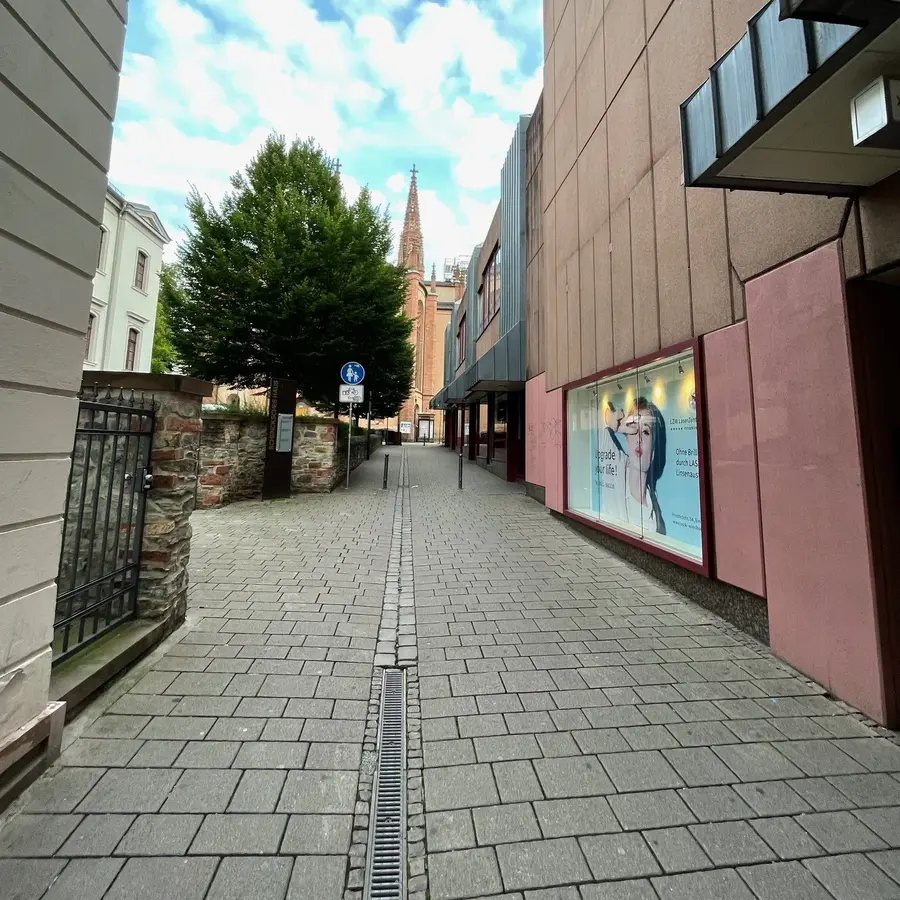
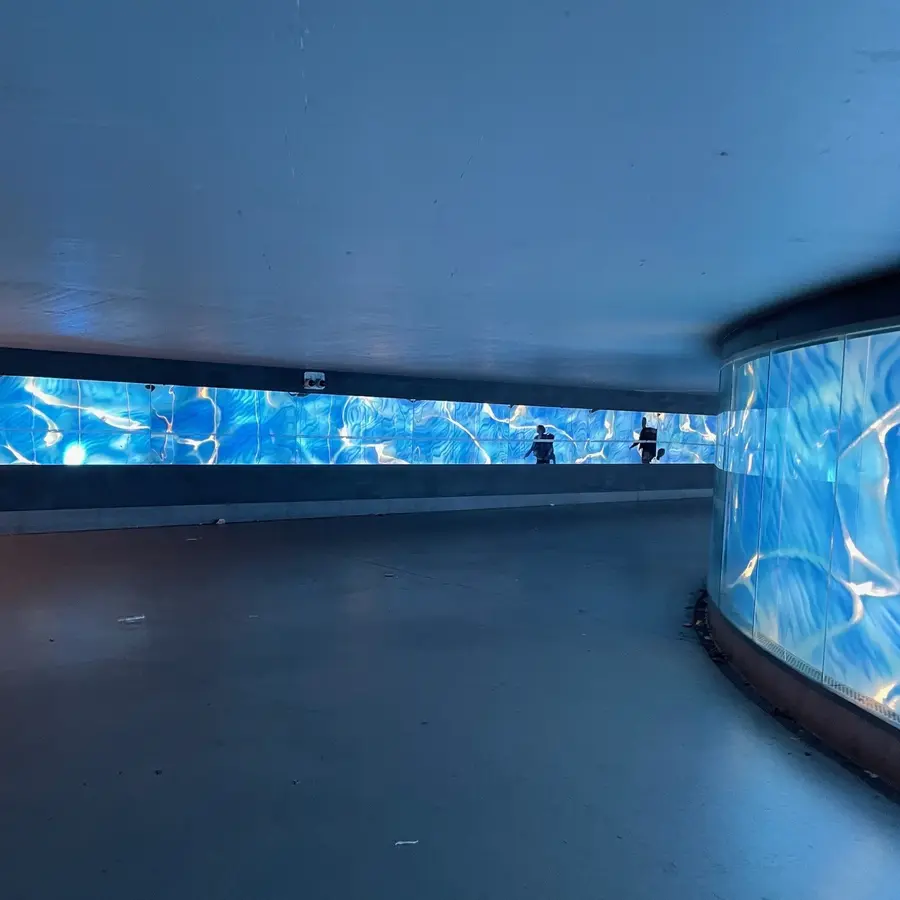
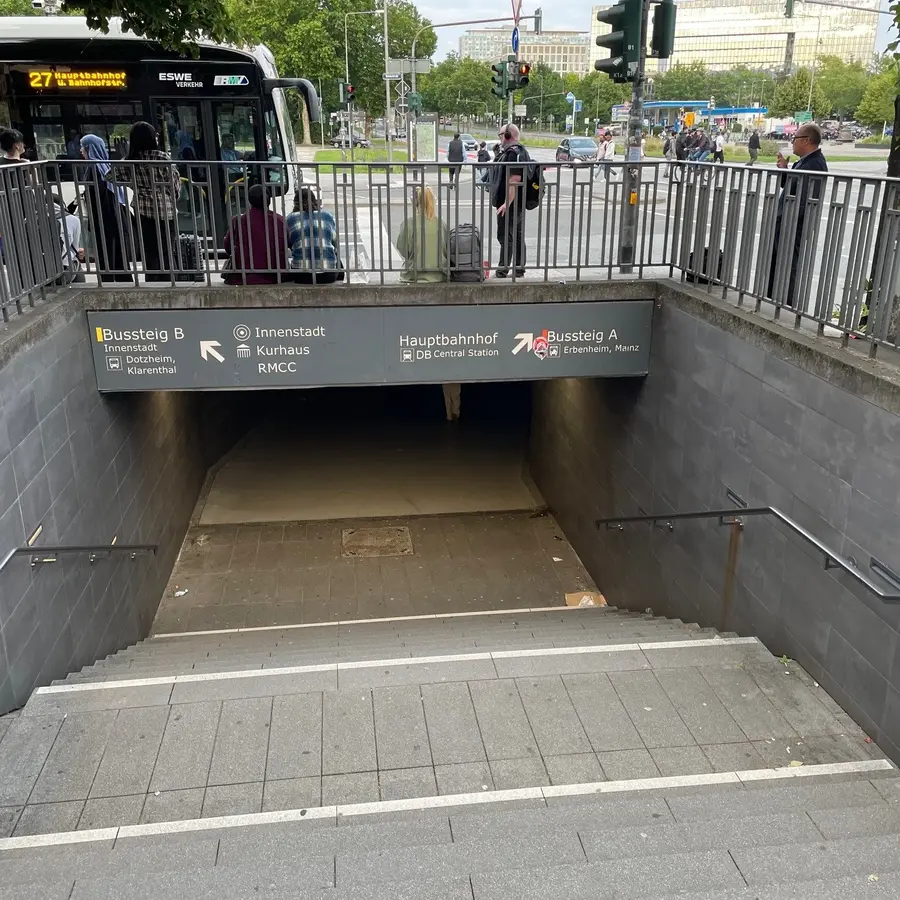
The project implements a four-language online survey in Wiesbaden that exclusively asks young people aged 18 to 31 about their perception of safety in public spaces in Wiesbaden.
The results are evaluated qualitatively and are intended to provide a deeper understanding of the different meanings of space and subjective insecurity and how resulting patterns of use (i.e. mobility decisions) are mapped. This research should contribute to a more diverse and equitable knowledge production in the field of subjective safety and space.