HERILAND 2025: Rethinking Cultural Heritage
HERILAND 2025: Rethinking Cultural Heritage
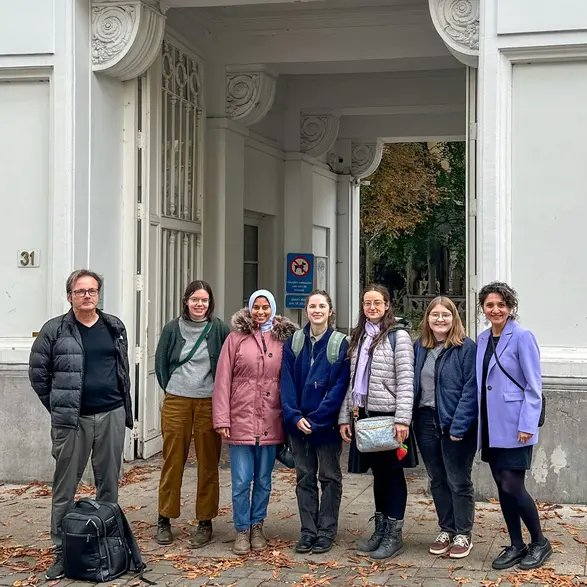
13.11.2025 - Five students from Hochschule RheinMain – University of Applied Sciences and Arts—Elizabet Hristrova, Eva Lützeler, Johanna Lentes, Noha Mourad, and Pia Decker—had the opportunity to participate in the “HERILAND Blended Intensive Program 2025” at the University of Antwerp alongside Professor Michael Kloos and Dr. Merve Demiröz-Torun. The program took place in the form of webinars and in-person sessions in Antwerp and was organized by Professor Dr. Yonca Erkan and Fiona Hamilton. More than 40 students and professors from various European universities participated: the University of Antwerp, Vrije Universiteit Amsterdam, the University of Gothenburg, Vilnius University, and Hochschule RheinMain – University of Applied Sciences and Arts.
HERILAND – A Platform for Sustainable Cultural Heritage
HERILAND is an association dedicated to a democratic, sustainable future, with a focus on the tangible and intangible value of cultural heritage. The program’s goal was to empower future young professionals to manage various cultural landscapes sustainably and to familiarize themselves with new tools in this field.
On the first day, we were welcomed at the Felix Archive by Prof. Dr. Yonca Erkan and Prof. Dr. Inge Bertels. In the run-up to the seminar, we had been tasked with thoroughly examining a cultural landscape of our choice and analyzing which social challenges should be highlighted in that context. The results of this research were discussed in small groups. We also gained fascinating insights into the history and the current architectural and archaeological challenges and projects in the city of Antwerp through several lectures by Prof. Dr. Iason Jongepier, Karen Minsaer, Tim Bellens, and Simone van Gemert.
Excursion through Antwerp
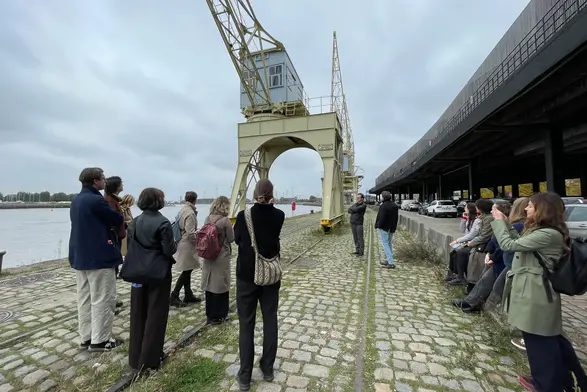
We spent Tuesday exploring Antwerp together. Small working groups presented important sites and landmarks in the city—always with a focus on cultural heritage and its evolution.
Workshops on HUL and PHP – Methods and Perspectives
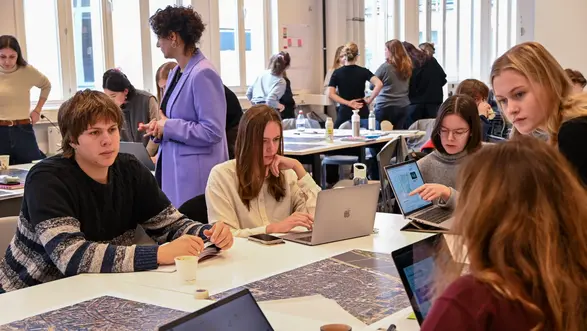
Over the following days, we learned theoretical methods for analyzing heritage values and applied them directly to Antwerp’s cultural landscape.
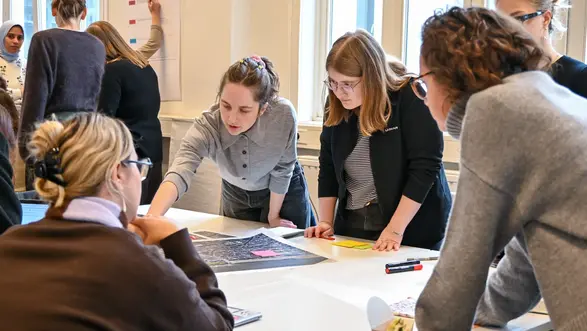
The first workshop on HUL (Historic Urban Landscapes) was led by Prof. Dr. Yonca Erkan. Small groups identified what is important for Antwerp’s cultural landscape and developed concrete ideas for implementing the goals across four different areas: knowledge and planning, civic participation, regulatory processes, and finance.
The workshop on PHP (Participatory Heritage Planning) was led by Professor Susanne Fredholm. It took into account not only aspects of human life but also the perspectives of other living beings and elements, such as water. Ultimately, by listening to different perspectives, common ground was found.
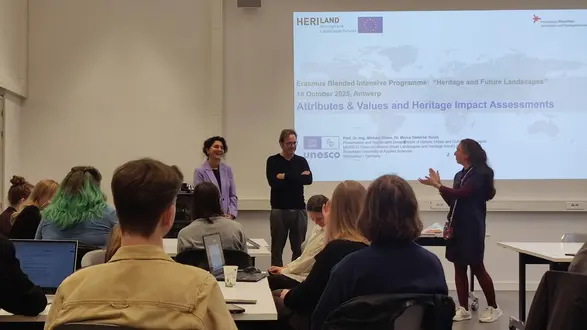
On Friday morning, we students were also challenged in a workshop; the tutorial on HIA (Heritage Impact Assessment) provided a practical approach to the sustainable development of World Heritage sites. To conclude the week, two keynote lectures provided insights into the definition of the concept of heritage and its expansion, as well as the active participation of the international heritage community.
Conclusion – Interdisciplinary Exchange and New Perspectives
Participating in the HERILAND program facilitated an intensive exchange on heritage conservation activities. The interdisciplinary composition of the student body in particular sparked exciting discussions that, in addition to the lectures and workshops, yielded interesting insights. The in-depth work on our blog posts, using the concepts we had learned, also provided an opportunity to engage with the HERILAND philosophy based on our individual interests.