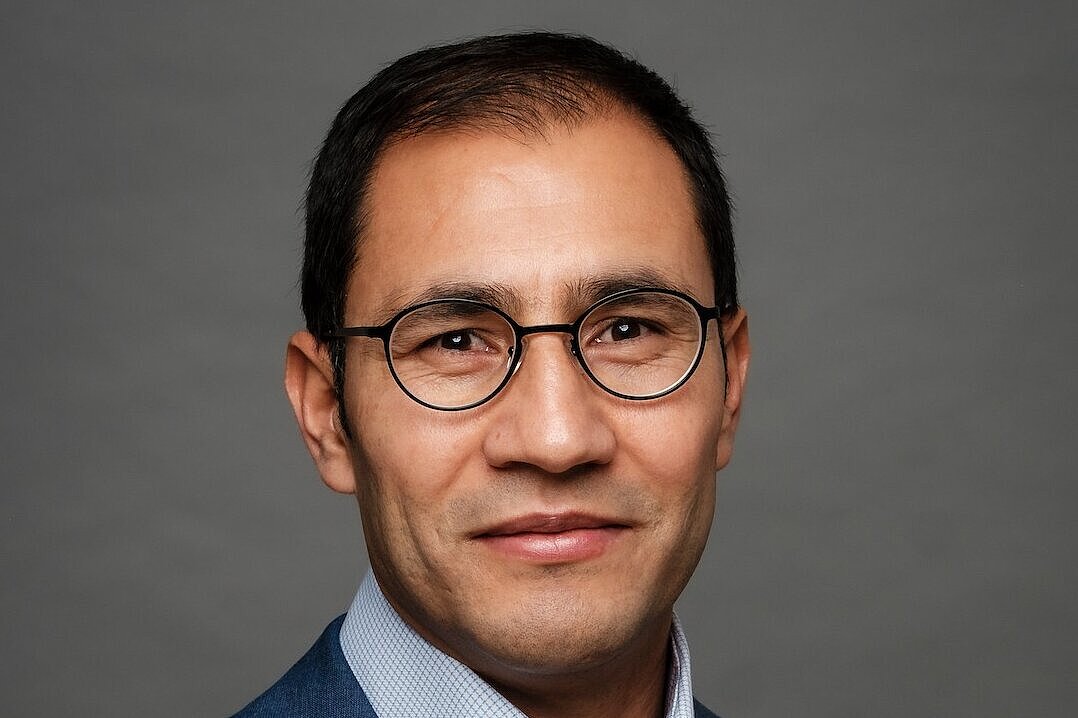
He studied law at Freie Universität Berlin while also completing a supplementary program in Turkish law at Humboldt-Universität zu Berlin. He passed the First State Examination in Law in 2007 and the Second State Examination in 2009, both in Berlin, and earned his doctorate in law from the University of Bremen in October 2014. His research took him to the University of Glasgow in Scotland and the University of Brasília in Brazil. From 2015 to 2020, he worked as a research associate in public law and international law at the University of Erlangen-Nuremberg, where he completed his habilitation in May 2021 with a thesis entitled Transforming Social Law Affiliation.
Between October 2020 and September 2025, he served as a visiting professor and acting chair at the universities of Erlangen-Nuremberg, Halle-Wittenberg, Giessen, Würzburg, Bielefeld, and Konstanz as well as at the European University Viadrina in Frankfurt (Oder). From August 2022 to May 2023, he also served as State Secretary for Justice in the Berlin Senate Department for Justice, Diversity and Anti-Discrimination. Prior to his appointment at HSRM, Prof. Dr. Kanalan already served as Interim Professor for Social Law in the context of social work at the University from April to September 2026.
Which aspect of your research fascinates you the most?
I am fascinated by the freedom to engage with the questions I consider important—especially socially relevant legal issues—and to scrutinize them as critically as I see fit. Of course, this freedom does not exist in a vacuum; it always navigates the tension between one’s own academic interests and the framework conditions of academia.
If I set this tension aside, however, what fascinates me most is the privilege of scholarly work: working with the precision and care of a watchmaker, constantly asking follow-up questions, questioning supposed certainties, and even arguing against the “prevailing opinion.” And sometimes to question everything all over again in order to start anew. This freedom of thought, of critical inquiry, and of engaging with socially relevant issues is, for me, the most wonderful aspect of research.
What does good teaching mean to you?
To me, good teaching means conveying the basics and essentials of a subject in a way that is understandable, interactive, and as case-based as possible, while also incorporating interdisciplinary perspectives. Above all, I want to encourage students to think independently, ask questions, and critically examine even what is taken for granted. For me, good teaching therefore conveys not only knowledge but also the joy of thinking for oneself.
What did you want to be when you were a child?
Even though studying was initially a very distant dream for a child of Kurdish descent from a village in Turkey, I had a career aspiration from an early age: at first, I wanted to become a doctor; later, a lawyer. What connected both of these aspirations was the desire to help people and, in particular, to stand up against injustice.
How do you find a balance to your work?
I love spending time with my family and playing sports. Both help me clear my head and recharge my energy.