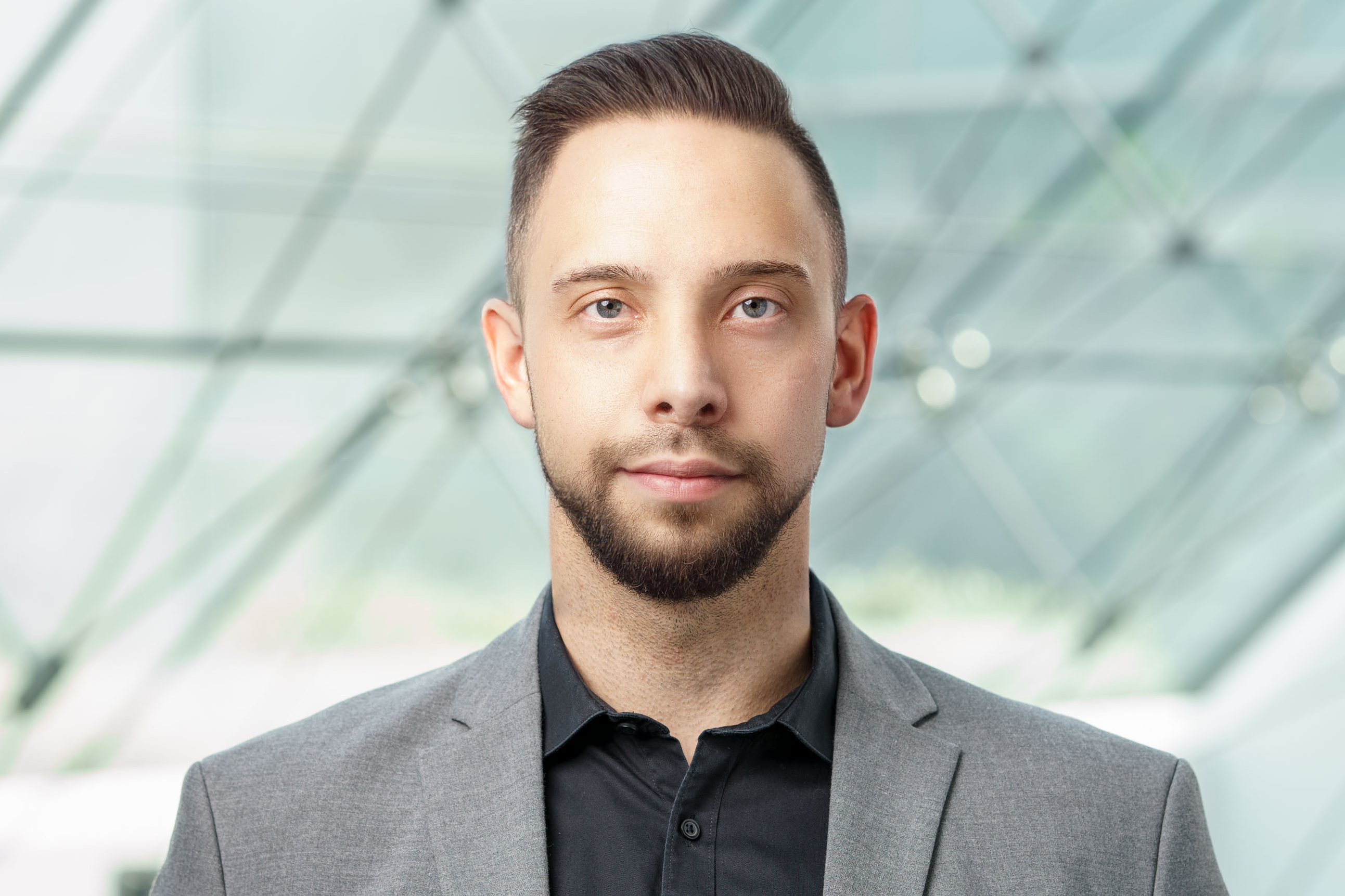
He first completed a Bachelor's degree in Applied Computer Science at HSRM and then completed two Master's degree programs in Business Informatics and Computer Science. In 2024, he obtained a doctorate in Computer Science with a thesis on the development of machine learning methods for the automated documentation of everyday activities. In parallel to his interim professorship, he is a senior researcher at the Fraunhofer Institute for Computer Graphics Research IGD. His research and teaching activities lie at the interface of Computer Science, Machine Learning, Sensor Data Analysis and Digital Health. The focus is on application-oriented systems that are used in the care and health context in particular.
What aspect of your research fascinates you the most?
I am particularly fascinated by the path from data and algorithms to practical systems that are actually used in everyday health and care settings and provide measurable benefits. Particularly in the context of demographic change, I think it's crucial to develop software and hardware solutions that are suitable for everyday use, relieve the burden on care staff and improve the quality of care.
What constitutes good teaching for you?
I have been at the HSRM since 2010 and have experienced many very good, but also less successful courses during this time. Over the years, I have developed a clear understanding of what makes good teaching for me: it conveys solid basics in such a way that they can be applied in practical experience. Methodological depth is reflected in a precise understanding of models, algorithms and data; practical relevance in transferring this knowledge to real-world problems, interpreting results and justifying decisions in a comprehensible way. Students should learn not only to implement Computer Science methods correctly, but also to reflect on them critically and use them responsibly.
What career aspirations did you have as a child?
As a child, I was not exclusively technically minded. I see my strengths particularly in communication and in putting myself in students' shoes and supporting them as equals. Especially in times of new AI technologies, this human aspect often seems more important to me than simply conveying content. At the same time, I wanted to do something technical early on, where you understand, design and improve systems. This motivation ultimately led me to Computer Science.
How do you find a balance to your work?
I mainly find balance in sport and outdoor activities, which help me to get away from the daily grind. I'm also involved in the board of TSV Bleidenstadt and work as a fitness trainer at HSRM. Everyone is welcome to come and see me.