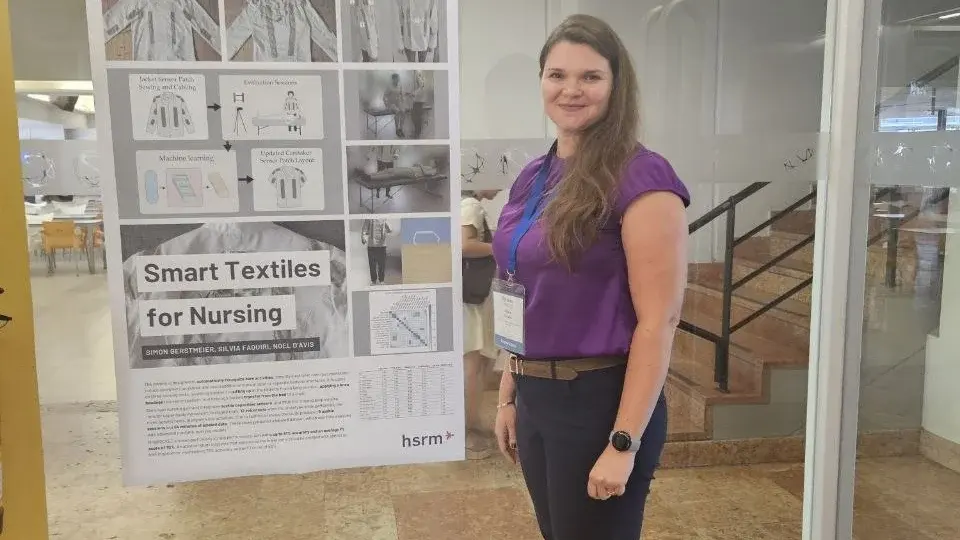

The workshop brings together researchers from industry and academia to further develop smart environments for health and well-being. The goal is to create innovative solutions that reduce the workload on healthcare professionals.
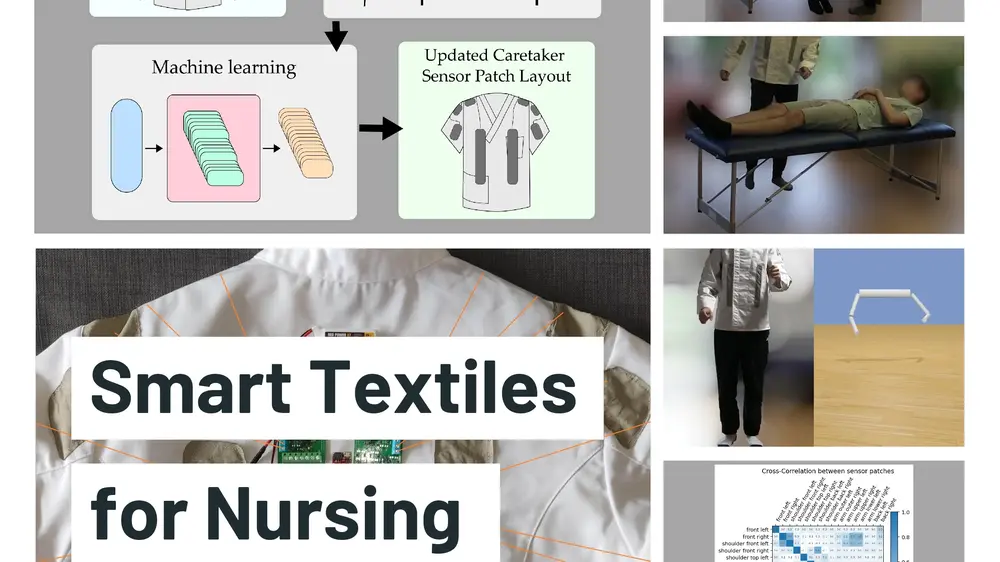
The work presented demonstrates the potential of smart clothing for the healthcare sector. A prototype featuring flexible textile sensors was tested in the context of typical nursing tasks. The results are based on a master’s thesis by Simon Gerstmeier and suggest that smart textiles could help improve electronic documentation and significantly reduce the workload of nursing staff in the future.
In addition, Prof. Faquiri presented a conference paper based on Mr. D’Avis’s doctoral research at the Intelligent Environments Conference. The doctorate is being supervised jointly with Prof. Ralf Dörner, Dean of the DCSM faculty, and is based at the Doctoral Center for General Computer Science.
The research achieved a performance improvement and surpasses the previous state of the art by 6 percentage points—from 86 to 92 percent, as measured against an existing dataset. To achieve this, an AI model was developed and trained to classify data collected by mmWave sensors for 27 activities of daily living. The previous model was significantly improved, particularly in terms of sensitivity to left-right symmetries. mmWave sensors are considered particularly suitable for this purpose, as they provide a high degree of privacy protection for users.
The faculty is proud that the results of the work from our degree programs are gaining international visibility and can be reported on.