Media Computer Science
What is it about?
Media Computer Science is an interdisciplinary degree program that combines computer science with design qualifications. The aim is to provide practical, rigorous, and broad computer science training. Topics covered include user-centric design and the development of interactive applications relating to web, mobile computing, computer graphics and games, VR/AR, AI, and many other fields.
The core of the degree program is computer science. This means that it is a fully-fledged computer science degree that covers, among other things, many computer science topics that relate to conception and development:
- Programming with current system, script, and markup languages
- Software development, databases, networks for distributed systems on the Internet, cloud and mobile applications
- Interactive applications, web, computer graphics, and AI-related issues
- Agile software technology concepts for analysis, modeling of application scenarios, and implementation of these using topical examples
The computer science focus is usefully complemented by instruction on media and design. The design training includes the following:
- Typography, colors, and layout
- Responsive design
- Interaction design
- UX and UI design
- Motion design
During the degree program, you will work on specific projects that integrate the different viewpoints of the development process. This ensures that you will be very well prepared for your future career.
What can I do with it?
Graduates of the Bachelor of Science in Media Computer Science are fully qualified computer scientists. You'll take on challenging tasks from the business, industry, trade, and service sectors.
Possible fields of work are:
- Full stack developer
- Front-end developer
- Web developer
- App developer
- Game developer
- VR, AR, MR, XR engineer
- Back-end developer
- Software developer
- Multi-platform engineer
- Project manager
+Cooperative
Media Computer Science can also be pursued as a cooperative degree program. In a practice-integrated track, you have the opportunity to combine your studies with concurrent practical experience. To do this, you’ll need a study contract with a partner company of Hochschule RheinMain – University of Applied Sciences and Arts. During the semester break, you’ll be regularly employed at your partner company. During the teaching period, you’ll spend one day a week gaining practical experience at that company.
For more information on the cooperative studies program and the partner companies, visit the page:
Cooperative Studies Program in Computer Science
Course of Study
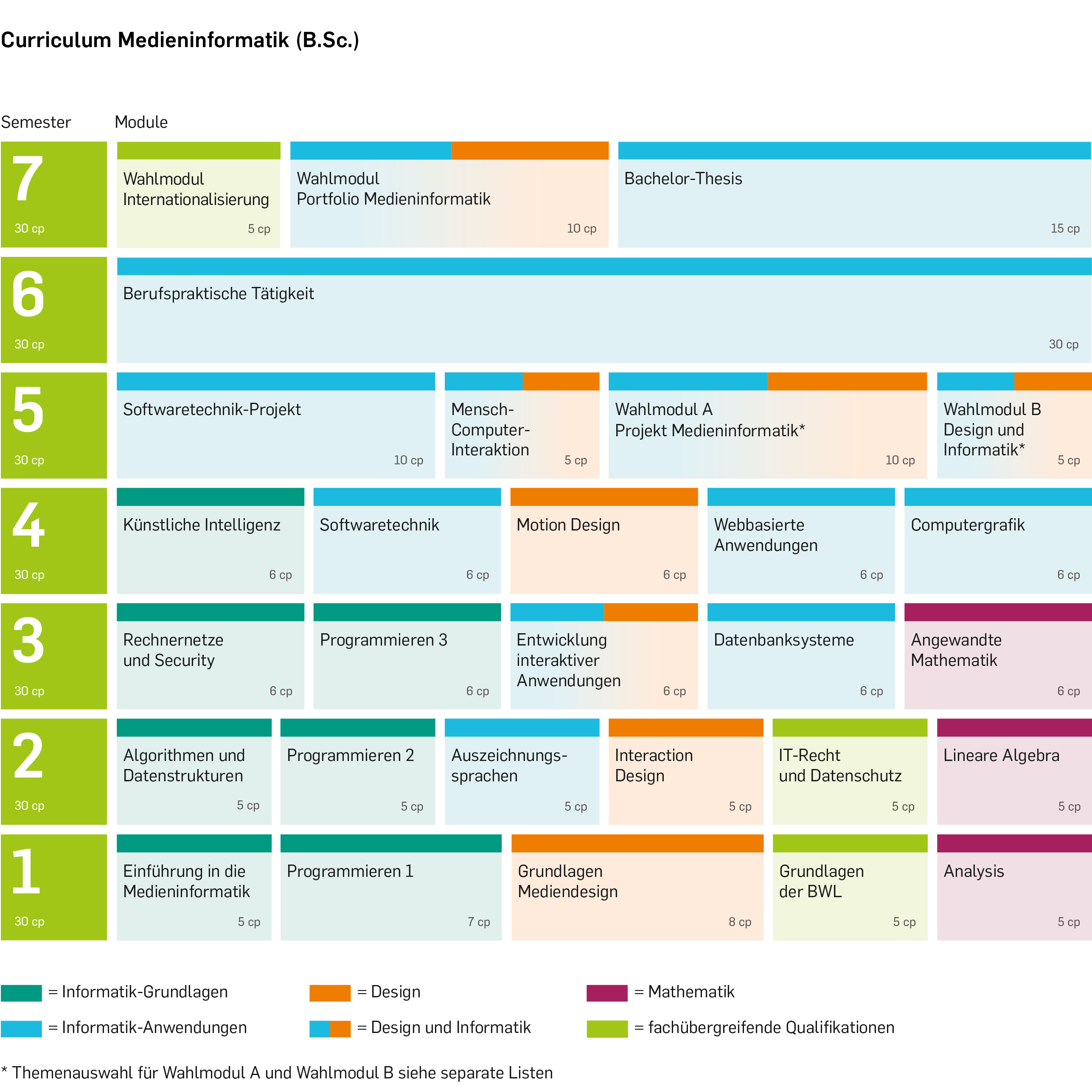
In the Media Computer Science studies, you’ll learn user-centered design and the development of interactive applications in the fields of web, mobile computing, computer games, VR/AR, AI, and many other areas of application. As a full-fledged Computer Science degree program, it integrates the various perspectives involved in the development process, ensuring that you’ll be very well prepared for your future career. In many core courses, the basics of Computer Science and media design are first established, allowing you to gradually bring your own ideas and projects to life while you’re still in your studies.
During the first three semesters, the focus is on practical Computer Science. You will take:
- Programming 1–3
- Markup Languages
- Databases
Each semester also includes a design course covering the following topics:
- Basics of Media Design
- Interaction Design
- Development of Interactive Applications
In addition, essential Computer Science basics are taught, including:
- Introduction to Media Computer Science
- Algorithms and Data Structures
- Computer Networks
- IT Security
The studies are supplemented by:
- Analysis, Linear Algebra, and Applied Mathematics
- Business Administration
- IT Law and Data Protection
In the 4th semester, you’ll delve deeper into Computer Science with a focus on interactive and networked media. The course content includes:
- Web-based applications
- Computer graphics
- Software Engineering
- Artificial intelligence
In the design track, you’ll delve deeper into the topics of user guidance, animation, and simulation in the subject:
- Motion Design
Starting in the 5th semester, you’ll tailor your studies to your individual interests. In addition to the compulsory modules:
- Software Engineering Project
- Human-Computer Interaction
you can choose from the following specializations:
- Project Courses in Media Computer Science
- Topics in Design and Computer Science
In the 6th semester, you’ll complete your internship at a company of your choice.
After that, the following options are available to you in the 7th semester:
- Development of an individual project in the portfolio module
- Taking additional electives
You’ll complete your studies in the 7th semester with your bachelor’s thesis. You have flexibility in choosing a topic:
- Developing your own idea
- Linking your project to the university’s research and development projects
- Deriving a topic from your internship company
- Collaborations with domestic and international universities and companies
Practice-Oriented Studies
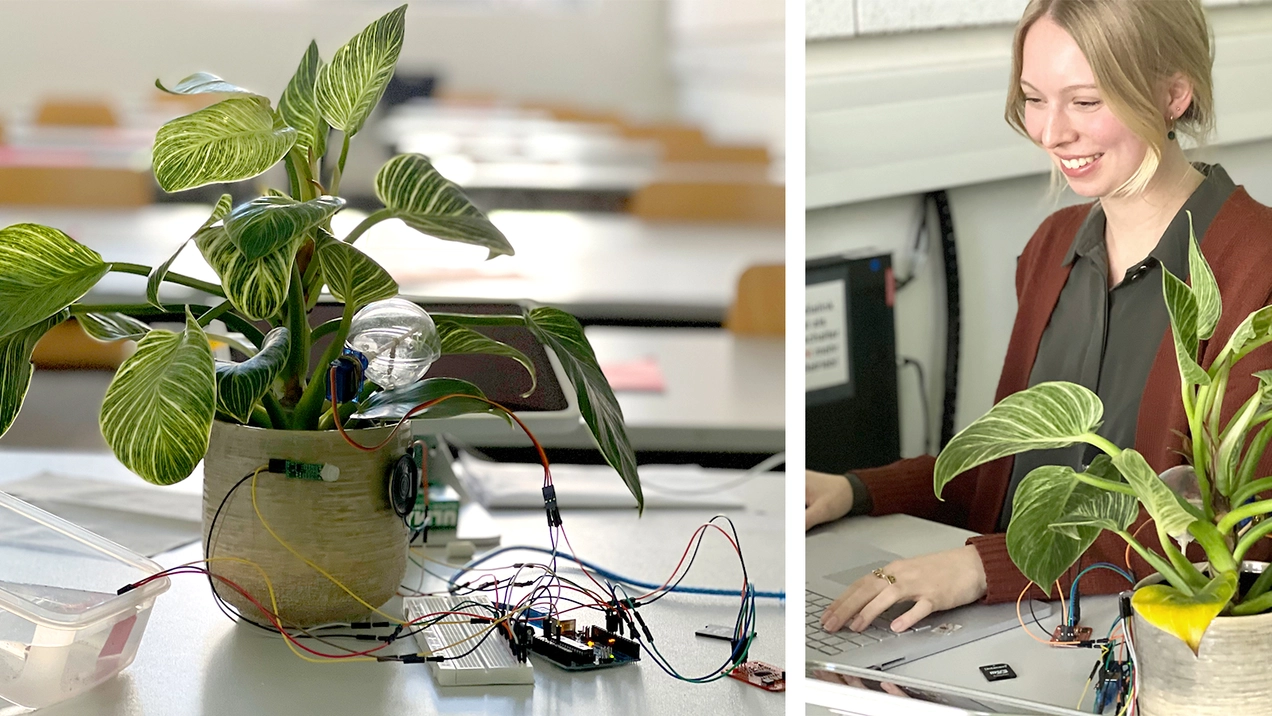
Starting in your first semester, you’ll have the opportunity to work on projects in small teams, allowing you to put what you’ve learned into practice. This way, you’ll become familiar with typical work methods and project phases in Computer Science and media design very early on.
In the second semester, as part of the Interaction Design subject, you’ll work in teams to design an interactive web or app application. In the third semester, you’ll then program your first original idea in the Interactive Application Development subject and bring it to life as part of a team.
To enable you to plan, design, and program larger projects in the future, you’ll acquire additional project skills in software engineering and through the Software Engineering Project course during the fourth and fifth semesters. The focus here is on agile software development, as it is practiced in the industry.
What tools are available to you during your design training? In your Media Computer Science studies, you’ll learn how to use the following professional software, among others:
- Adobe Creative Cloud CC (including Photoshop, InDesign, Illustrator, and After Effects)
- For image editing, booklet layout, vector graphics, and motion design
- Available for free in all Media Computer Science computer labs
- Additionally, through the 4th semester, you’ll also receive a free home license for use at home
- Figma – for collaborative UI/UX design and clickable prototypes
- Blender – for 3D modeling, animation, and rendering
- Miro – for agile project work and team coordination
How do you find the right company for your internship semester in Media Computer Science? At Hochschule RheinMain – University of Applied Sciences and Arts, we actively support you: At the annual Computer Science Company Outreach Day, companies from the Rhine-Main region and international global players who are specifically looking for Media Computer Science graduates present their opportunities. Here, you’ll establish early connections with company representatives—often former students of our degree program—and gain insights into job profiles, internship opportunities, and career paths.
Why this is important:
- Direct interaction with potential employers—starting as early as your first semester.
- Practical insights into IT professions: from web development to software engineering, game development, and VR/AR development.
- An informed decision about your internship semester (6th semester), during which you’ll apply theory to real-world IT projects.
What can you do after earning a bachelor’s degree in Media Computer Science? At Hochschule RheinMain – University of Applied Sciences and Arts, we offer three master’s degree programs in Computer Science to further your studies:
- Media Computer Science – Intelligent and Interactive Systems
(including AI, UX/UI, human-computer interaction, visual computing) - Computer Science – Software and System Engineering
(including software architecture, technical systems, cloud computing) - Business Informatics – Information Systems & Digital Transformation
(including IT management, digital government, digital business models, software architecture)
Your Career Paths After Graduation: Thanks to the studies’ practical focus, you’ll be qualified for in-demand IT careers such as:
- Full-Stack Developer
- Web & App Developer
- Front-end/Back-end Developer
- Game Developer
- VR/AR/XR Engineer
- Software Developer
- Multi-platform Engineer
- Project Manager
Why Study Media Computer Science at Hochschule RheinMain – University of Applied Sciences and Arts?
- Comprehensive IT training with a focus on digital media, AI, and interactive systems.
- Strong connections with companies in the Rhine-Main region—ideal requirements for internships and jobs.
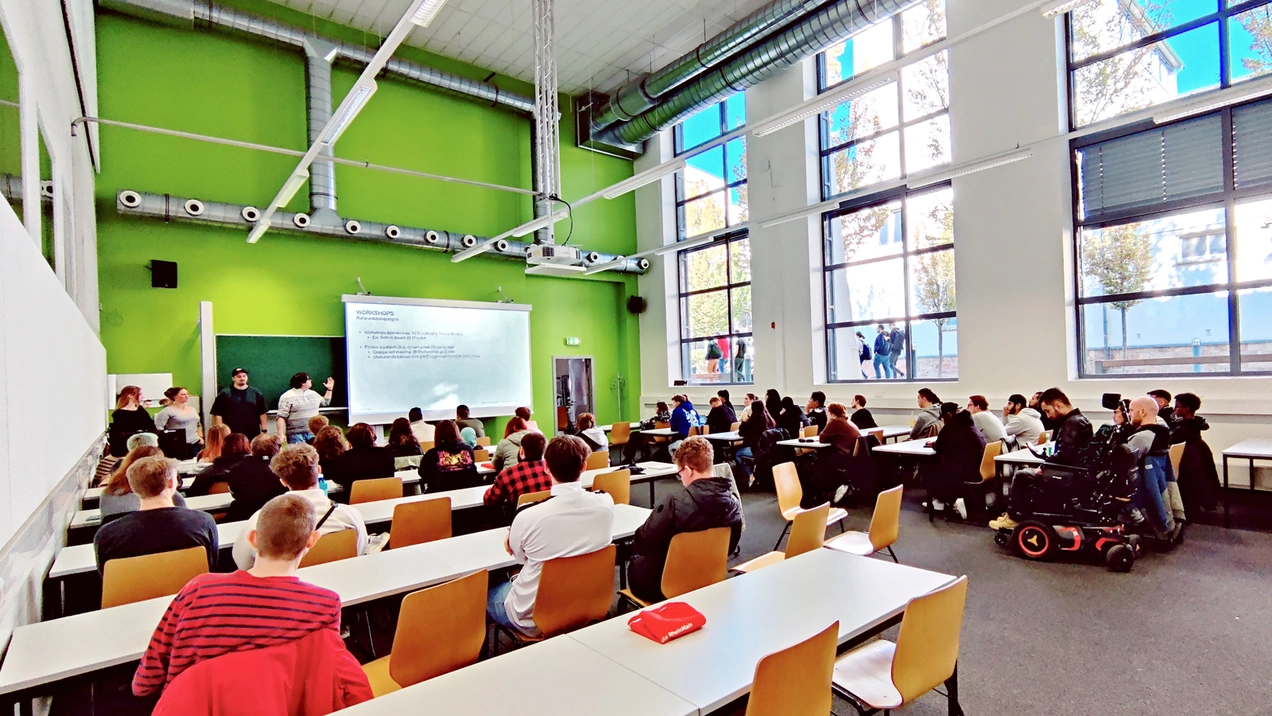
Customized Planning
Are you interested in gaining a deeper insight into the studies of Media Computer Science?
We’d be happy to advise you in a one-on-one meeting. Schedule an appointment with us to discuss our programs and answer your questions, or join us directly at our events during an “open house.”
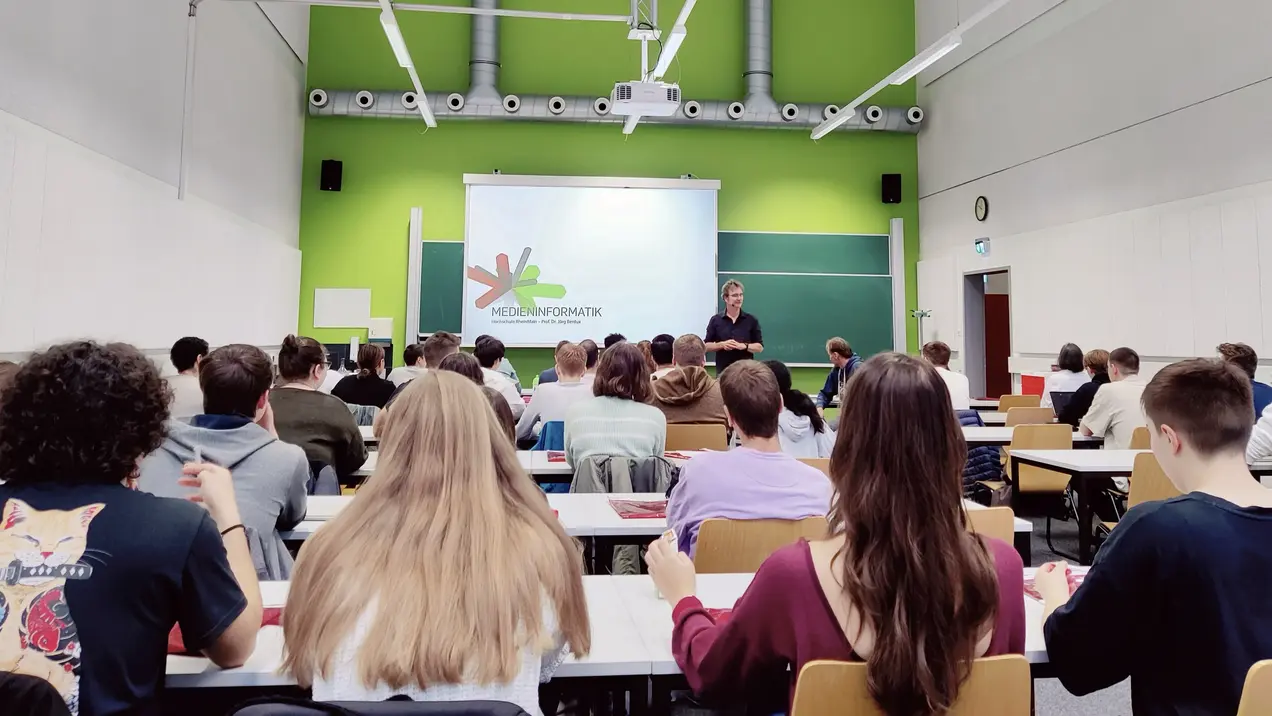
Start of the Academic Year and Appointments
Regular admission to the degree program is only possible during the winter semester. If you’re transferring into the degree program, please contact the office for more information.
Information on Starting
Your First Semester
Before Starting Your Studies
Information on planning and applying before you begin your studies.
Application (German academic transcripts)
About the Application Process (Foreign Academic Transcripts)
During Your Studies
Information on appointments and organizational matters during your studies.
About the Organization of Your Studies