Participation of children in child protection (Participation for Protection, P4P)
| Project name: | Participation of children in child protection (Participation for Protection, P4P) |
| Faculty: | Applied Social Sciences |
| Head: | Prof. Dr. phil. Heidrun Schulze |
| Project participants: |
|
| Project leader: | Queen's Belfast University |
| Project partners from Austria: | Ludwig Boltzmann Institute of Human Rights Research Association:
|
| Project partners from Belgium: | Katholieke Universiteit Leuven:
|
| Project partners from the Republic of Ireland: | National University of Galway, Ireland: |
| Project partners from Romania: | Universitatea Babes Bolyai: |
| Project partners from the United Kingdom: | Queen's University Belfast:
|
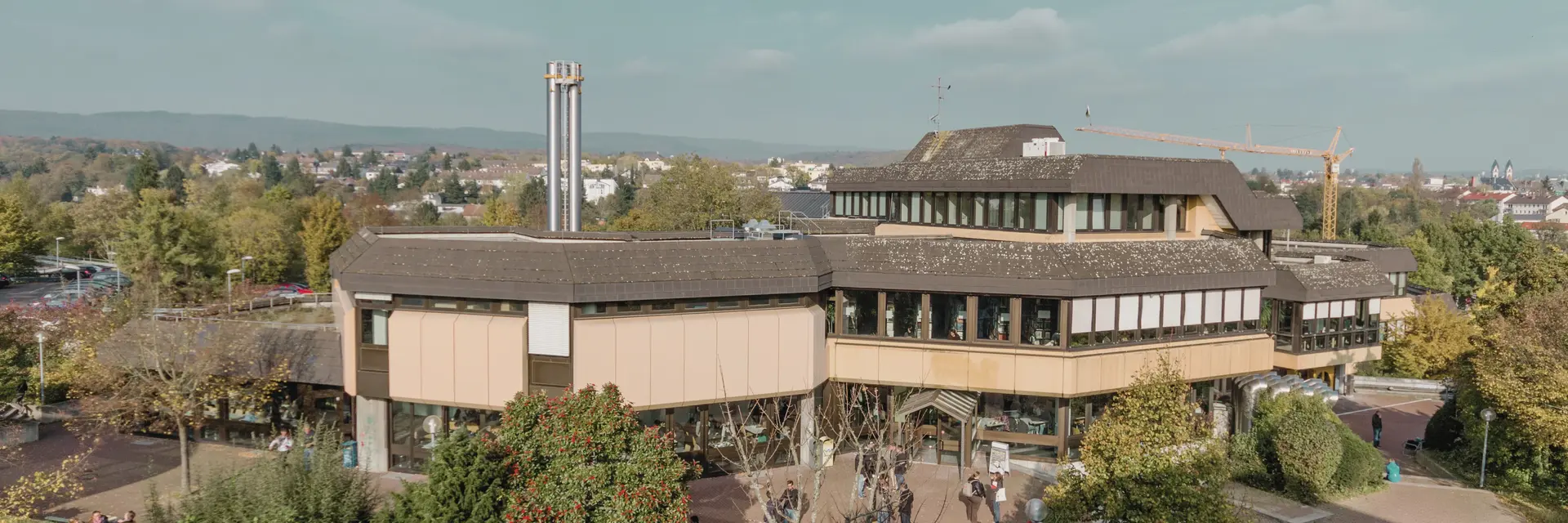
| Project partners from Germany: | Hochschule RheinMain:
|
| Funding body: | European Union |
| Duration: | 01.12.2017-01.11.2019 |
Brief project description
"Participation for Protection" (P4P) is a research project funded by the European Commission. Its goal is to improve child-centered approaches and child rights-based support for children and young people who have experienced violence. The project helps those who work with children and young people to better understand their needs. To this end, training for children and young people and training materials for professionals have been developed on the basis of a child rights-based approach. The project, led by Dr. Siobhan McAlister, Centre for Children's Rights at Queen's University Belfast, involves partners from Austria, Belgium, Germany, the Republic of Ireland, Romania and the United Kingdom. Partners include representatives from: Babes-Bolyai University; Children's Rights Knowledge Center (KeKi); Include Youth; KU Leuven Institute of Criminology (LINC); Ludwig Boltzmann Institute of Human Rights; RheinMain University of Applied Science; UNESCO Child and Family Research Centre, NUIG; University of Nottingham.
During the project, we asked over 1,300 children and young people aged 8 to 18 in the partner countries what they thought could cause harm or injury. We also asked them what helps them to disclose violence and confide in someone after experiencing violence and what good responses from professionals might be.
The interviewees included girls and boys in schools and from groups who are specifically at risk of violence or have already experienced violence, including young people in closed youth welfare facilities, children with a history of flight or migration, children who have experienced family violence/domestic violence, LGBT*IQ children and young people, children and young people in political conflicts, children and young people in residential/outpatient child/youth welfare facilities or in care.
It is important to note that two children and young people's advisory groups in Northern Ireland were involved throughout the project (from St Ita's Primary School, Include Youth's, Give and Take Program, and Newstart Education Centre). They were instrumental in developing a questionnaire for a survey of children and young people, interpreting the data collected and identifying key messages that provided a working framework for the production of the training program.
The project was born out of the conviction that although training resources for trainees and professionals working with children affected by or at risk of violence exist in practical experience, these were often developed by adults and therefore from an adult perspective. The P4P team, on the other hand, aimed to understand from the children's perspective what they understand by violence, what barriers to disclosing violence and seeking help may be, how useful support can be established and how professionals can better respond to children.
Taking into account all the information children and young people provided to us in the questionnaire and workshops, we worked with the children and young people's advisory groups mentioned above to develop the following training materials:
- A training package containing four modules on key themes from across our work with children and young people
The additional resources section provides further materials for trainers who wish to deliver training on any or all of these topics.
- A handbook for facilitating training for people who want to explore the topic of violence with children in an ethical, sensitive and non-intrusive way.
- A checklist based on children's views of what is 'good' or useful for them to do when they need support. Professionals can use this to assess their own practical experience from a child's perspective.
- Additional resources - we have collected a lot of information in this project that can be used by professionals, trainers or students to inform their work and practical experience. This includes:
- Country specific information on child protection and complaints procedures
- Questionnaire developed in collaboration with children
- Summary of the results of the survey and a report of the country-specific results
- Summary of the results of workshops with groups of children and young people experiencing or at risk of violence
- Factsheets summarizing key findings from workshops with children and young people from six groups that have experienced or are at risk of violence(young people in closed youth welfare facilities, children with a history of flight or migration, children who have experienced family violence/domestic violence, LGBT*IQ children and young people, children and young people in political conflicts, children and young people in residential child and youth welfare facilities or in care, Sinti and Roma children).
- Materials for children and young people:
- Child-friendly summary of the survey results
- Information sheet on the topic of violence for children. This was designed by the advisory groups to inform other children about violence and it includes references to some local support services and contact addresses.
Short animation co-produced by children.
EC Disclaimer: "The content of these training resources represents the views of the authors only and is his/her sole responsibility. The European Commission does not accept any responsibility for use that may be made of the information it contains."