Social Work as a colonial knowledge archive? A history laboratory on the (post-)colonial legacy of Social Work as a model of historiographical teaching research
Information videos for use in teaching/educational work
Video Part 1: Social Work and Colonialism.
Author and realization: Samuel Godwyll. Sources for the video.
Video Part 2: The Concept of Culture in Social Work
Author and realization: Najoua El Khiari.
Video Part 3: Social Work as a human rights profession against the historical background of colonialism
Author and realization: Thi Huyen Anh Nguyen.
The videos can be watched individually or in sequence and used in teaching or educational formats.
Radio play: Voluntourism and voluntary services in post-colonial conditions
A radio play that takes a critical look at voluntourism and development cooperation in post-colonial conditions. The radio play can be downloaded here.
A project by Julian Scriba, Julia Stauffer and Roksana Stronczek.
Project management: Prof. Dr. Wiebke Dierkes.
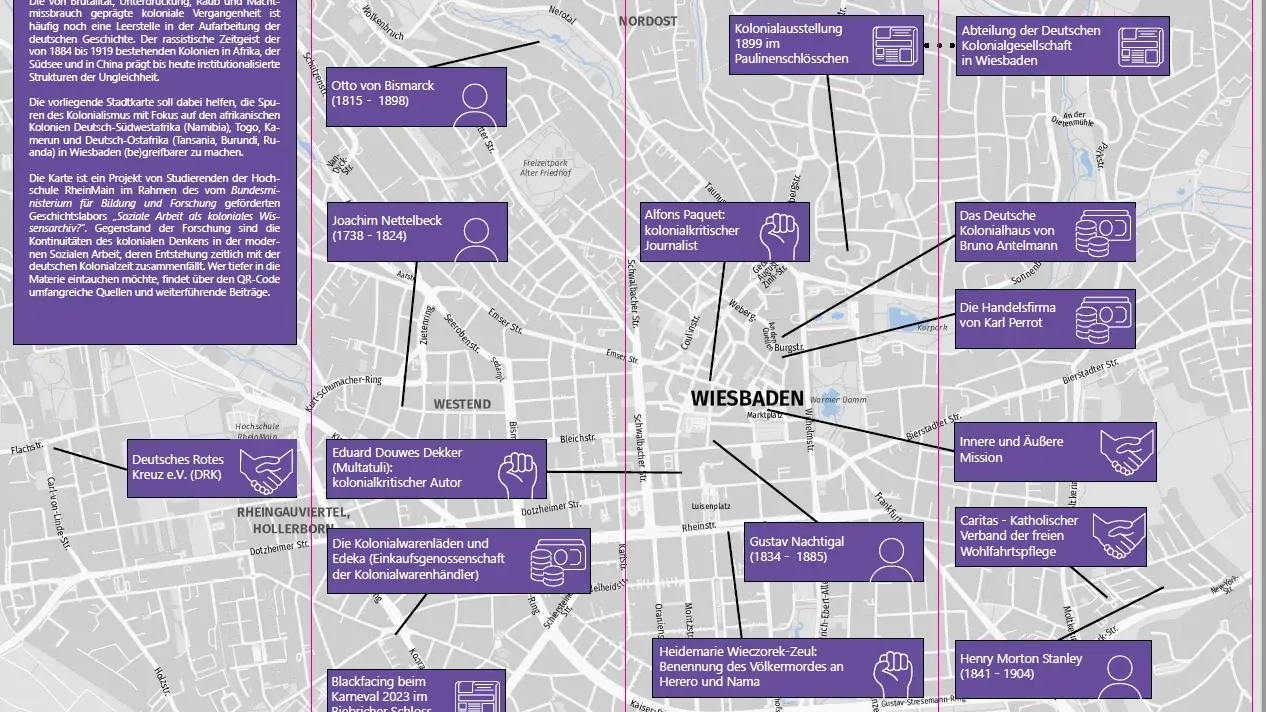
City Map (Post-) Colonial Wiesbaden
The city map shows places that play an important role in Wiesbaden's colonial history. The map is systematized according to the fields of colonial critics, colonial goods stores, events, Social Work and people.
The map can be downloaded here so that everyone can search for clues on their own. We wish you interesting insights!
A project by Janna Trinemeier and Carina Sträßner in cooperation with Dr. Susanne Claußen from the Wiesbaden Protestant Dean's Office and Dr. Katherine Lukat from the Wiesbaden City Archive.
Project management: Prof. Dr. Wiebke Dierkes
The map was presented to the public on 22.10.2024:
https://www.fr.de/rhein-main/auf-den-spuren-der-kolonialgeschichte-93370049.html
https://wiesbaden-lebt.de/kolonialgeschichte-stadtplan-beleuchtet-dunkles-kapitel
https://intern.ekhn.de/facettnet/detail/news/post-koloniales-wiesbaden-neue-stadtkarte.html
Colonial traces (Sensor Wiesbaden, November 2024 edition)
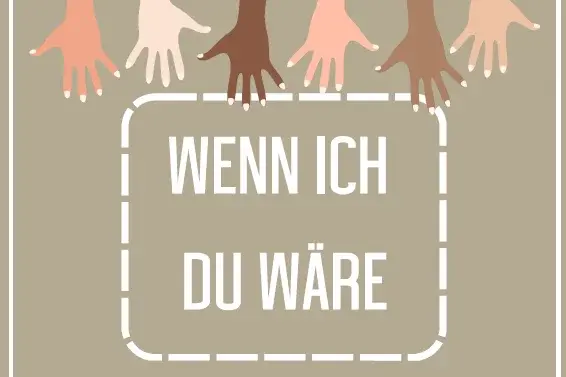
Game "If I were you" - The game with an insight into current issues, a change of perspective with a focus on migration and racism
A printable version of the game can be downloaded here. Sources and underlying literature are summarized here.
A project by Elisa Hartmann. Project management: Prof. Dr. Wiebke Dierkes
Travelling exhibition "De-Colonize it! - Social Work in the Footsteps of (Post-) Colonialism"
Information about the touring exhibition "De-Colonize it!"
The exhibition is designed as a traveling exhibition and can be borrowed by interested parties. Please send inquiries to wiebke.dierkes@hs-rm.de.
The exhibition deals with German colonial history and the structures and interdependencies that have developed in this context and that still shape our present day. Current debates on topics such as "white saviorism" and "voluntourism" are addressed in the exhibition. In particular, the historical links between early Social Work and education and the colonial project are critically examined in the exhibition using the example of colonial (women's) schools.
Contrary to the assumption that history is the past, the exhibition aims to illustrate how colonial power relations are reproduced in the present.
In this way, the exhibition aims to inspire pupils and students, teachers and professionals from the field of Social Work, other social sectors and all interested parties to deal with current socio-political issues in a reflective and racism-critical manner.
The exhibition is a student project that was created as part of the teaching research project "Social Work as a Colonial Knowledge Archive" in the bachelor's degree program Social Work 2023-2024. The exhibition was developed and realized by Aleksandra Graumann, Sina Gribl, Angelina Link, Tim Rosseburg and Maria Sala Archelos. Supported by: Daniela Khan Duyen Tran (student assistant). Project management: Prof. Dr. Wiebke Dierkes.
You can find a report on the exhibition here
The Wiesbadener Kurier reported on the exhibition in its issue of 11.7.2024. You can find the article here

At a glance - The research project "Social Work as a colonial knowledge archive"
| Project name: | Social Work as a Colonial Knowledge Archive? A history laboratory on the (post-)colonial heritage of Social Work as a model of historiographical teaching research |
| Faculty: | Applied Social Sciences |
| Management: | Overall project management:
|
| Project participants: | Pestalozzi-Fröbel-Haus Berlin:
University of Hildesheim:
University of Marburg:
|
| Contact Research Promotion and Funding: | Dr. Michael Bruch |
| Project partners: | Regional practice partners in the city of Wiesbaden and the Rheingau-Taunus district |
| Funding body: | Federal Ministry of Education and Research (BMBF), Directive "Current and historical dynamics of right-wing extremism and racism" |
| Duration: | 01.10.2023-31.12.2026 |
Brief project description
The emergence of modern Social Work as an academic appointment coincided with the period of formal colonial rule in Germany. Many people in the "first ranks" of Social Work were also active in the colonial movement and established links between social initiatives and colonial organizations. These historical interdependencies had a profound impact on the early phase of the profession's development and have not yet been systematically researched. The colonial intensification of the idea of Social Work as "cultural work" developed by the women's movement not only had an impact in the colonies as an instrument of power, but also in the metropolis. For example, colonial narratives can be found in descriptions of the lifeworlds of the addressees, who were often assigned colonial attributes and portrayed as "foreign" or "uncivilized". Even in international cooperation within the women's movement and Social Work, racism and colonialism were not met with resistance. Social Work constituted itself as a white space in which Eurocentric ideas of social order, education, work and family life became guiding principles.
With a view to the present day of Social Work, it is relevant to ask how this concept of Social Work has been handed down within the profession, whether and how it has been broken and what alternatives have been put forward to counter it. The project is particularly concerned with examining the role of social work initiatives in German colonialism and analyzing forms of (re)production of colonial and racist knowledge in historical sources of early Social Work. At the heart of the study is a series of teaching research projects lasting several semesters, which will be carried out in degree programs at the participating universities and colleges from the winter semester 23-24 and will enable students to engage in thematic exchange across the universities.